Caxambu, Minas Gerais
Historic mineral spa town · Circuito das Águas
Caxambu is one of the most traditional mineral-water spa towns in Brazil, set in the Serra da Mantiqueira in southern Minas. The Parque das Águas brings together twelve sparkling mineral water springs, a geyser and a historic bathhouse. Princess Isabel visited the town in 1868 and ordered the construction of the Igreja de Santa Isabel da Hungria. A cable car takes you up Morro de Caxambu, with views of the town and a Cristo Redentor statue. Homemade sweets round out the visit.
Caxambu at a glance
- Population: 21 thousand
- Area: 100,5 km²
- Elevation: 895 m
- Distance from Belo Horizonte: 376 km
- Demonym: caxambuense
- Founded: 1901
- Region: Southern Minas
- Tourism region: IGR Águas
- Area code: 35
- IBGE code: 3115508
Caxambu is part of the tourism region IGR Águas.
History
The name Caxambu appears in the accounts of the bandeirantes (colonial-era explorers), who used a flat-topped hill as a landmark. In 1674, Lourenço Castanho Taques is said to have sighted Morro de Caxambum. A sesmaria (colonial land grant) was awarded in 1706, but the settlement grew slowly. By 1814 there were already reports of the waters' healing properties.
Development came with the mineral springs. The Fonte Dona Leopoldina was tapped in 1850, and the imperial family's visit in 1868 gave tourism a boost. In 1875 Caxambu became a district of Baependi, and the parish of Nossa Senhora dos Remédios was created.
State Law No. 319, of September 16, 1901, created the municipality, split off from Baependi. It was raised to city status in 1915. Hotels and casinos turned the town into a leisure hub until gambling was banned in 1946.
In 1999 the Parque das Águas was listed as a state heritage site. The Balneário, opened in unfinished form in 1879, reopened in 2010 after more than three years of work.
Timeline
- 1674 · Lourenço Castanho Taques sights Morro de Caxambum
- 1706 · First sesmaria (land grant) awarded in the region
- 1850 · Fonte Dona Leopoldina is tapped
- 1868 · Visit of Princess Isabel and the Conde d'Eu
- 1875 · Becomes a district of Baependi and the parish is created
- 1879 · Unfinished opening of the Balneário
- 1897 · Inauguration of the Igreja de Santa Isabel da Hungria
- 1901 · Municipality created
- 1915 · Raised to city status
- 1999 · Parque das Águas listed as a state heritage site
Things to do in Caxambu: attractions
Parque das Águas
Nature · Town center
About 210,000 m² with twelve sparkling mineral water springs, the geyser, a lake with pedal boats and a grove. It is downtown and is a state heritage site.
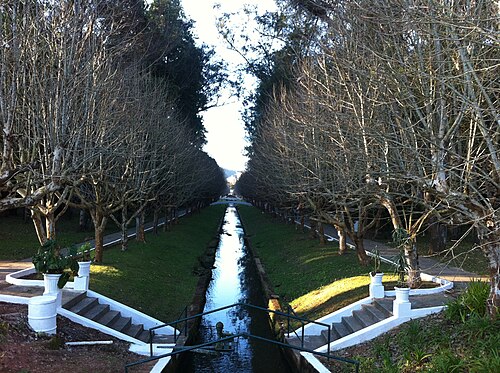
Gêiser Floriano de Lemos
Nature · Parque das Águas
A jet of water at about 27 °C that reaches 8 meters high and erupts a few times a day.
Fonte Princesa Isabel e Conde d'Eu
Spring · Parque das Águas
An iron-rich water spring linked to the imperial family's visit.
Balneário Hidroterápico
Bathhouse · Parque das Águas
Immersion baths, saunas, showers and a mineral water pool in a historic building with Portuguese tiles.
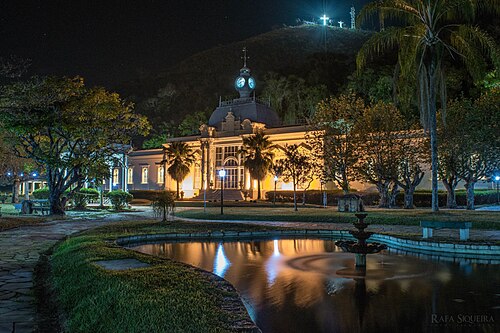
Igreja de Santa Isabel da Hungria
Church · Town center
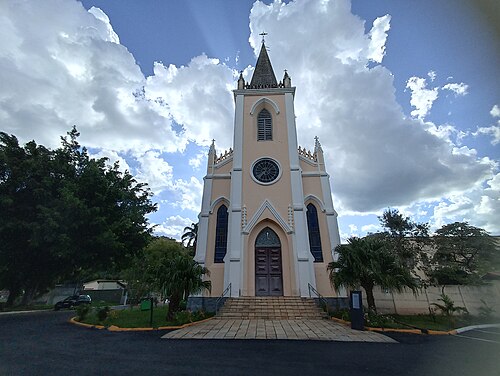
Built at the order of Princess Isabel, its cornerstone dates from 1868 and it was inaugurated in 1897. The staircase has 126 steps.
Teleférico e Morro de Caxambu
Viewpoint · Starts next to Parque das Águas
Climbs to the 1,090 m hill, with a lookout, a large cross and a 15-meter Cristo Redentor statue.
Alameda dos Plátanos
Square · Parque das Águas
A tree-lined walkway attributed to Princess Isabel, inside the park.
Palace Hotel
Historic hotel · Town center
Formerly the Grande Hotel e Cassino, it still keeps gaming machines and card tables from the casino era.
Centro Cultural e Profissional Estação Ferroviária
Cultural center · Town center
Housed in the old station of the railroad that served the town until 1972.
Museu Histórico de Caxambu
Museum · Town center
A museum listed among the downtown sights.
Heritage
- Parque das Águas Dr. Lisandro Carneiro Guimarães · Listed by IEPHA/MG, under a 1999 state decree
- Igreja de Santa Isabel da Hungria · Church from 1897, listed as a state historic heritage site
- Balneário Hidroterápico · Building from 1879 with a 1911/12 design, part of the park complex
- Fontes do Parque das Águas · Pavilions and kiosks of the Dona Leopoldina, Duque de Saxe, Beleza and other springs
Nature
- Parque das Águas · Twelve mineral springs, a geyser, a lake and a grove in the center of town
- Morro de Caxambu · A 1,090 m hill with views of the town, reached by cable car
Rivers and waters
- River basin: Grande River (Paraná River basin), Sapucaí River sub-basin 2
- Rivers: Rio Baependi, Ribeirão Taboão, Ribeirão Bengo
Climate
- Type: Highland tropical (Cwb), annual average of 20 °C
- Winter: Dry and cold; -2.8 °C was recorded in 1962
- Summer: Rainy and mild; highs have reached 40 °C
Typical food
- Homemade sweets · The town's highlight, with doce de leite (milk caramel) and passion fruit cocada (coconut candy) sold in the sweet shops
Festivals and events
- Festival Boa Mesa · A food event listed among the town's activities; date not confirmed
Fun facts
- The Parque das Águas covers about 210,000 m² and is described as one of the largest mineral water complexes in the world.
- According to legend, Princess Isabel became pregnant after drinking water from the spring that now bears her name and that of the Conde d'Eu.
- In 1922 Caxambu's hotels and casinos employed eight orchestras.
- Gambling was banned in 1946, and the Palace Hotel still keeps machines and tables from that era.
- The cable car has 80 chairs and was designed in Italy.
Getting there
- Belo Horizonte · About 376 km by road
Notable people from Caxambu
- Princesa Isabel · Visited the town in 1868 and had the Igreja de Santa Isabel da Hungria built
- Conde d'Eu · The princess's husband, with her on the 1868 visit; one of the springs is named after him
- Lourenço Castanho Taques · Bandeirante said to have sighted Morro de Caxambum in 1674
- Felício de Oliveira Mafra · In 1844 he promoted the first houses near the springs
- Rui Barbosa · Author of the poem "Medicina entre Flores", about the town
People born in Caxambu
- Alberto Curi · 1926–1998
- Aparecida · Brazilian composer · 1939–1985
- Bárbara Aimi · Cantora brasileira · b. 1988
- Daniel Belmiro de Almeida · Político brasileiro · b. 1968
- Diva Lyra · Brazilian pianist · 1921–1992
- Ivon Curi · Brazilian singer, songwriter and actor · 1928–1995
- Joaquim Leite · 1939–2016
- Jorge Curi · Brazilian radio broadcaster · 1920–1985
- José Roberto de Castro Morais · Político do Brasil · b. 1964
- Karen Junqueira · Actriz brasileira · b. 1983
- Laudelino Augusto
- Oscar Noronha Filho · Brazilian lawyer · 1916–2015
- Policarpo de Magalhães Viotti · Brazilian politician · 1880–1975
- Rui Viotti · Sports commentator · 1929–2009
- Ryuler · Futebolista brasileiro · b. 1969
- Vanessa Vholker · Actriz brasileira · b. 1970
- Waldomiro Jamal
City hall
- Mayor: Luiz Henrique Diorio de Souza (PSDB), term 2025–2028
- Address: Praça XVI de Setembro, 24, Centro, Caxambu, MG, CEP 37440-000
- Phone: (35) 3341-9055
- Website: www.caxambu.mg.gov.br
Frequently asked questions
Where is Caxambu?
Caxambu is a municipality in the state of Minas Gerais, Brazil, in the Southern Minas region, 376 km from Belo Horizonte.
What is there to do in Caxambu?
The attractions of Caxambu include Parque das Águas, Gêiser Floriano de Lemos, Fonte Princesa Isabel e Conde d'Eu, Balneário Hidroterápico, Igreja de Santa Isabel da Hungria, Teleférico e Morro de Caxambu.
What is the population of Caxambu?
Caxambu has about 21 thousand inhabitants in an area of 100,5 km².
What is the typical food of Caxambu?
Homemade sweets (The town's highlight, with doce de leite (milk caramel) and passion fruit cocada (coconut candy) sold in the sweet shops).
How do you get to Caxambu?
Belo Horizonte: About 376 km by road.
Who was born in Caxambu?
Notable people from Caxambu include Princesa Isabel, Conde d'Eu, Lourenço Castanho Taques, Felício de Oliveira Mafra, Rui Barbosa, Alberto Curi, Aparecida (brazilian composer), Bárbara Aimi (brazilian singer).
Which tourism region is Caxambu part of?
Caxambu is part of IGR Águas, one of the 47 official tourism regions of Minas Gerais, with 15 municipalities.
What are the festivals of Caxambu?
Festival Boa Mesa.
What are people from Caxambu called?
People born in Caxambu are called caxambuense.
Towns near Caxambu
- Baependi · 5 km in a straight line
- Soledade de Minas · 15 km in a straight line
- Conceição do Rio Verde · 19 km in a straight line
- Cruzília · 20 km in a straight line
- São Lourenço · 20 km in a straight line
- Pouso Alto · 25 km in a straight line
- Carmo de Minas · 26 km in a straight line
- São Sebastião do Rio Verde · 27 km in a straight line