Juiz de Fora, Minas Gerais
The Manchester of Minas · Zona da Mata
Juiz de Fora is the largest city in the Zona da Mata and the fourth most populous in Minas. It grew up alongside the Caminho Novo, the gold road to Rio de Janeiro. In the 19th century it became an industrial hub and earned the nickname Manchester Mineira. It was home to the first hydroelectric plant in South America, Marmelos. Today it is a university and cultural center, with museums, the Cine-Theatro Central and the Portinari panels.
Juiz de Fora at a glance
- Population: 541 thousand
- Area: 1.435,7 km²
- Elevation: 677 m
- Distance from Belo Horizonte: 283 km
- Demonym: juiz-forano
- Founded: 1850
- Region: Zona da Mata and Vertentes
- Tourism region: IGR Caminho Novo
- Area code: 32
- IBGE code: 3136702
Juiz de Fora is part of the tourism region IGR Caminho Novo.
History
The region was opened up by the Caminho Novo, inaugurated in 1707 to link Vila Rica to the port of Rio de Janeiro. In 1713 the hamlet of Santo Antônio do Paraibuna arose on the banks of the river of the same name.
German engineer Henrique Halfeld built the Estrada do Paraibuna and settled in the region, where he was active in local politics. He is considered one of the city's founders. On May 31, 1850, the municipality separated from Barbacena. It became Cidade do Paraibuna in 1856 and was given the name Juiz de Fora in 1865.
With coffee from the Zona da Mata and the arrival of immigrants, the city industrialized early and was called the Manchester Mineira. In 1889 industrialist Bernardo Mascarenhas opened the Usina de Marmelos, the first hydroelectric plant in South America. The Museu Mariano Procópio opened in 1921 and the Cine-Theatro Central in 1929.
The 1929 crash shook the coffee-based economy, and recovery came from the 1960s onward. The founding of the Universidade Federal de Juiz de Fora strengthened the city's role as a regional hub for education, health care and services.
Timeline
- 1707 · Opening of the Caminho Novo, between Vila Rica and Rio de Janeiro
- 1713 · Founding of the hamlet of Santo Antônio do Paraibuna
- 1850 · Separation from Barbacena, on May 31
- 1856 · Elevated to Cidade do Paraibuna
- 1865 · The city is renamed Juiz de Fora
- 1875 · Opening of the first railway station
- 1889 · Opening of the Usina de Marmelos, the first hydroelectric plant in South America
- 1921 · Opening of the Museu Mariano Procópio
- 1929 · Opening of the Cine-Theatro Central
- 1956 · Unveiling of the Portinari panels downtown
Things to do in Juiz de Fora: attractions
Museu Mariano Procópio
Museum · Rua Mariano Procópio, 1100, Mariano Procópio
Opened in 1921, it holds more than 50,000 items and is the second-largest imperial museum in Brazil. The gardens are by Glaziou.
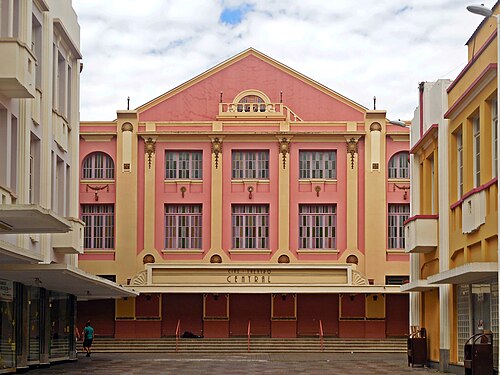
Cine-Theatro Central
Theater · Praça João Pessoa, s/n, Centro
Opened in 1929, with 1,851 seats and paintings by Ângelo Bigi. It is a nationally listed heritage site.
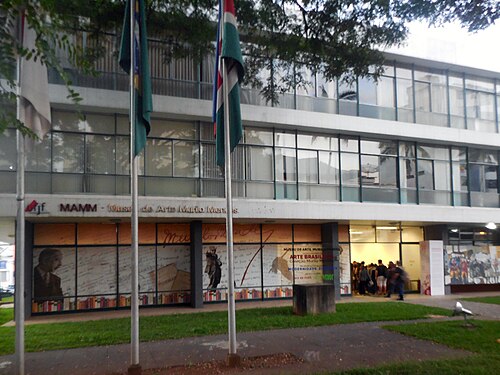
Museu de Arte Murilo Mendes
Museum · Rua Benjamin Constant, 790, Centro
Collection of art and books assembled by the poet Murilo Mendes, maintained by UFJF.
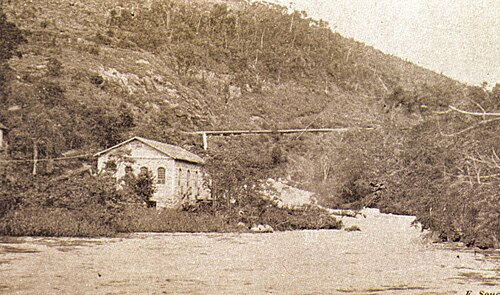
Usina de Marmelos
Heritage · Estrada União e Indústria, km 182, Retiro
The first hydroelectric plant in South America, from 1889. Heritage-listed in 1983 and open to visitors.
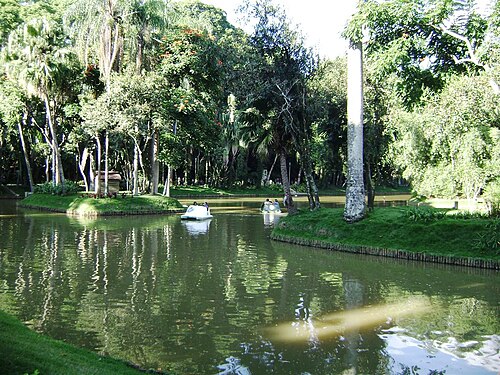
Parque Halfeld
Square · Av. Barão do Rio Branco, Centro
Central square with a bandstand and century-old trees, acquired by the City Council in 1854 and heritage-listed in 1989.
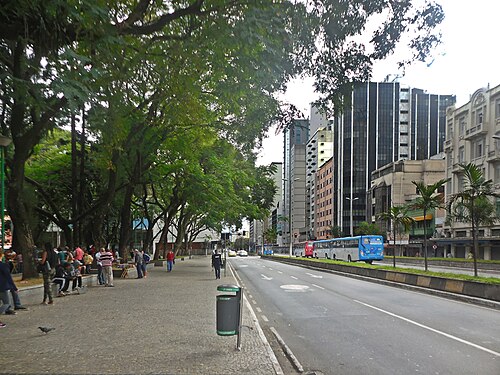
Painéis de Portinari
Art · Av. Barão do Rio Branco, 2189, e Rua Halfeld, 828
The panels As Quatro Estações and Cavalos, by Candido Portinari, have decorated the Edifício Clube Juiz de Fora since 1956.
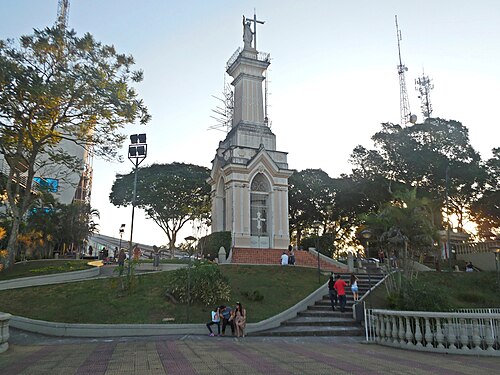
Morro do Imperador
Viewpoint
A lookout at 923 m elevation, with a century-old chapel and views over the whole city.
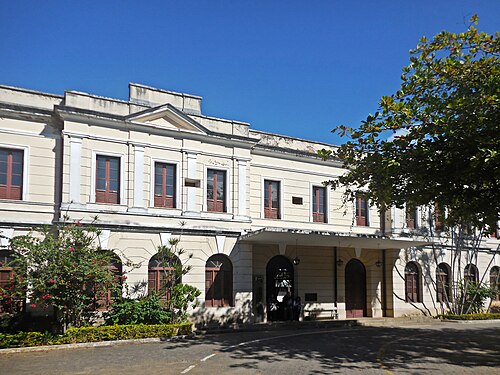
Railway Museum
Museum · Av. Brasil, 2001, Centro
In the former headquarters of the Estrada de Ferro Leopoldina, with more than 400 pieces and two steam locomotives.
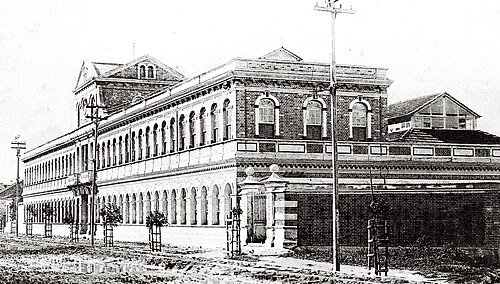
Centro Cultural Bernardo Mascarenhas
Cultural center · Av. Getúlio Vargas, 200, Centro
A former textile mill restored in 1985 and turned into a cultural center.
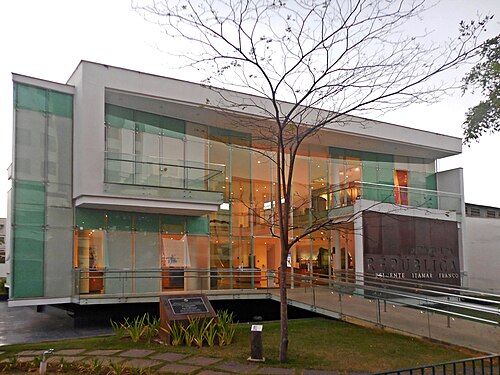
Memorial da República Presidente Itamar Franco
Museum · Rua Benjamin Constant, 720, Centro
Collection about Itamar Franco and the Republic, including the 1993 Fusca (VW Beetle).
Jardim Botânico da UFJF
Nature · Rua Cel. Almeida Novais, 246, Santa Terezinha
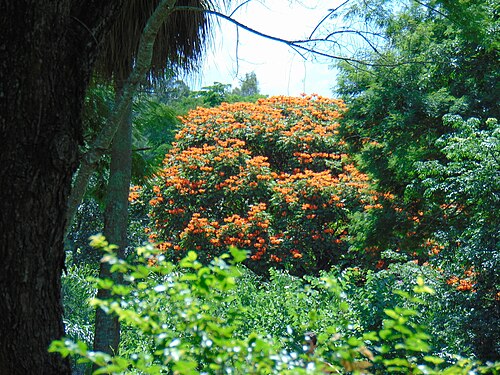
Opened in 2019 in the Mata do Krambeck, a remnant of Atlantic Forest, with trails and exhibitions.
Parque da Lajinha
Park · Av. Deusdedith Salgado, s/n, Cascatinha
A 140,000 m² green area with stretches of Atlantic Forest, open Tuesday through Sunday.
Heritage
- Cine-Theatro Central · A 1929 theater listed as national historic heritage.
- Usina de Marmelos · The first hydroelectric plant in South America, heritage-listed in 1983.
- Castelinho da Cemig · An 1890 building with a medieval look, heritage-listed by the city in 1988.
- Paço Municipal · A 1918 building designed by Rafael Arcuri, seat of city hall until 1997.
- Painéis de Portinari · As Quatro Estações and Cavalos, from 1956, heritage-listed by the city.
- Parque Halfeld · Central square heritage-listed in 1989.
Nature
- Reserva Biológica do Poço D'Anta · An Atlantic Forest conservation unit within the municipality.
- Reserva Biológica Santa Cândida · A protected area of urban forest.
- APA da Mata do Krambeck · An Atlantic Forest remnant where the Jardim Botânico da UFJF is located.
- Morro do Imperador · A 923 m hill with a lookout over the city.
Rivers and waters
- River basin: Rio Paraíba do Sul
- Rivers: Rio Paraibuna, Rio do Peixe, Rio Cágado
Climate
- Type: Highland tropical (Cwa)
- Winter: Dry and mild, with cold nights
- Summer: Hot and rainy
- Best time to visit: April to September, the dry season
Typical food
- Arab cuisine · Syrian and Lebanese families left behind traditional restaurants in downtown.
Chefs from Juiz de Fora
- Pablo Oazen · Garagem Gastrobar. Winner of MasterChef Professionals 2017.
- Cristiane de Freitas · Restaurante da Cris. Known as the queen of feijoada.
- Marília Medeiros · Varanda Gourmet. Comfort cooking and sourdough pizza.
Flavors of Minas: typical dishes and chefs
Festivals and events
- Carnaval de Juiz de Fora (fev) · A tradition dating back to the 19th century, with street bands (blocos) and samba schools.
- Miss Brasil Gay e Rainbow Fest (ago) · National pageant and diversity festival, with free events.
Fun facts
- The Usina de Marmelos, from 1889, was the first hydroelectric plant in South America.
- The city was once called Santo Antônio do Paraibuna and Cidade do Paraibuna.
- It was the first city in Minas to have streetcars, in 1881, still drawn by animals.
- The first public elementary school (grupo escolar) in Minas opened in Juiz de Fora in 1907.
- The Memorial Itamar Franco keeps a 1993 Fusca, a symbol of the affordable 'people's car'.
Getting there
- Belo Horizonte · About 283 km via BR-040
- Rio de Janeiro · Via BR-040
- Other highways · BR-267, MG-353 and MG-133
Districts
- Caetés de Minas
- Humaitá de Minas
- Monte Verde de Minas
- Penido
- Rosário de Minas
- Sarandira
- Torreões
- Valadares
Notable people from Juiz de Fora
- Murilo Mendes · Modernist poet born in Juiz de Fora in 1901. The UFJF art museum bears his name.
- Itamar Franco · President of Brazil. He grew up in Juiz de Fora, where he was mayor in 1967-1971 and 1973-1974.
- Henrique Halfeld · German engineer considered one of the town's founders.
- Bernardo Mascarenhas · Industrialist who built the Usina de Marmelos, opened in 1889.
- Margarida Salomão · Linguist born in Juiz de Fora, the first woman rector of UFJF and the first woman elected mayor of the city.
- Tarcísio Delgado · The mayor who governed the city the longest, over three terms. He died in 2025.
People born in Juiz de Fora
- Adalberto Hilário Ferreira Neto · Futebolista brasileiro · b. 1987
- Agostinho Pestana · Brazilian politician · 1928–2008
- Alacir Frederico Werner · Brazilian military officer, chief of staff of the Armed Forces in the João Figueiredo government · 1916–2010
- Alberto Chimelli · Vocalista brasileiro · b. 1953
- Alberto Delpino · Brazilian painter · 1864–1942
- Alexandre Hill Maestrini · Diretor · b. 1963
- Alfredinho Flautim · 1884–1958
- Alfredo da Silva Ramalho · Político do Brasil · b. 1964
- Alfredo Ferreira Lage · Photographer, journalist · 1865–1944
- Amilcar Campos Padovani · Advogado brasileiro · b. 1936
- Ana Paula de Paula Loures de Oliveira · Etnologista · b. 1968
- André Assis · Físico brasileiro · b. 1962
- André Luiz Antunes Netto Carreira
- Andréia Horta · Atriz brasileira · b. 1983
- Antonio Carlos Pereira Junior · Physician · 1940–2000
- Antonio de Oliveira · Futebolista brasileiro · b. 1940
- Antonio Santos de Aguiar · Político do Brasil · b. 1954
- Antônio da Silva Melo · Brazilian writer · 1886–1973
- Antônio Henrique Weitzel · Antropólogo brasileiro · b. 1932
- Antônio Rufino · Brazilian musician
- Aparecido Reis Miguel Oliveira · Político do Brasil · b. 1972
- Arlindo Daibert
- Ayrton Castro de Rezende · Jogador de voleibol brasileiro · b. 1987
- Beatriz Thielmann · Brazilian journalist · 1952–2015
- Belmiro Valverde Jobim Castor · Brazilian lawyer · 1942–2014
- Bernardo Faria · Artista marcial · b. 1987
- Beto Cupolillo
- Betão · Político do Brasil · b. 1964
- Biel Rocha
- Bilinho Teixeira · Músico · b. 1956
- Bruno de Freitas Siqueira · Político brasileiro · b. 1974
- Caetano Brasil · Clarinetista, saxofonista, compositor, arranjador e produtor musical brasileiro · b. 1994
- Cafuringa · Brazilian footballer · 1948–1991
- Carlos Bracher · Pintor, escritor e escultor brasileiro · b. 1940
- Carlos Henrique Dias · Futebolista brasileiro · b. 1980
- Carlos Medeiros Silva · Brazilian lawyer and politician, former justice of the Supreme Federal Court · 1907–1983
- Carlos Moreira Garcia · Diplomata brasileiro · b. 1944
- Carol Lekker
- Cazé · Músico brasileiro · b. 1961
- Charlles Evangelista · Político brasileiro · b. 1984
- Chiquinho Pastor · Brazilian footballer
- Clóvis Corrêa da Silva
- Conceição da Costa Neves · Brazilian actress · 1908–1989
- Coronel Piccinini
- Créo Kellab · Brazilian actor and model
- Custódio da Silva Braga · Brazilian engineer and politician · 1872–1940
- Dalmar · 1941–2011
- Daniel Corrêa · Brazilian footballer · 1994–2018
- Daniela Arbex · Jornalista brasileira · b. 1973
- Delegada Ione Barbosa
- Dilermando Martins da Costa Cruz Filho · Brazilian politician · 1907–1971
- Dinah Kojuck Zekcer · Política do Brasil · b. 1938
- Dinah Zekcer · Brazilian politician, lawyer and educator
- Edimilson de Almeida Pereira · Escritor brasileiro · b. 1963
- Edmundo Villani-Côrtes · Pianista brasileiro · b. 1930
- Edson Silva · Brazilian actor and voice actor (1930–2026)
- Eduardo José Lima de Freitas · Político do Brasil · b. 1952
- Edvaldo Piccinini Teixeira · Político do Brasil · b. 1945
- Elisangela Colodeti · Jornalista brasileira · b. 1976
- Eny Moreira · Brazilian lawyer · 1946–2022
- Erik Mayrink · Piloto de Automobilismo · b. 1995
- Ernani Sales
- Eugênia Álvaro Moreyra · Actor, journalist · 1898–1948
- Eurico dos Santos Veloso
- Evandro Teixeira Magalhães · Futebolista brasileiro · b. 1986
- Fabiano Bittar · Jogador de voleibol brasileiro · b. 1980
- Fabricio Melo · Brazilian basketball player · 1990–2017
- Fani Bracher · Brazilian painter
- Faustino Luiz Couto Teixeira · n. 1954
- Felipe Moreira Roque · Jogador de voleibol brasileiro · b. 1997
- Felipe Silva · Lutador de artes marciais mistas · b. 1984
- Felipe Surian · Futebolista brasileiro · b. 1981
- Fernando Cardoso · Brazilian politician · 1937–2021
- Fernando Cedrola · Futebolista brasileiro · b. 1986
- Fernando Gabeira · Político brasileiro · b. 1941
- Fernando Vidal Leite Ribeiro · 1865–1936
- Florindo Alves Ferreira · Brazilian footballer · 1914–http
- Flávia Bonato · Actriz brasileira · b. 1974
- Francisco Alves da Silva Pereira
- Francisco Antônio de Mello Reis · Brazilian politician · 1937–2010
And 197 more names in Notable people of Minas Gerais.
City hall
- Mayor: Margarida Salomão (PT), term 2025–2028
- Address: Av. Brasil, 2001, Centro, Juiz de Fora (MG), CEP 36060-010
- Phone: (32) 3690-7240
- Website: www.pjf.mg.gov.br
Frequently asked questions
Where is Juiz de Fora?
Juiz de Fora is a municipality in the state of Minas Gerais, Brazil, in the Zona da Mata and Vertentes region, 283 km from Belo Horizonte.
What is there to do in Juiz de Fora?
The attractions of Juiz de Fora include Museu Mariano Procópio, Cine-Theatro Central, Museu de Arte Murilo Mendes, Usina de Marmelos, Parque Halfeld, Painéis de Portinari.
What is the population of Juiz de Fora?
Juiz de Fora has about 541 thousand inhabitants in an area of 1.435,7 km².
What is the typical food of Juiz de Fora?
Culinária árabe (Syrian and Lebanese families left behind traditional restaurants in downtown).
When is the best time to visit Juiz de Fora?
April to September, the dry season. The climate is highland tropical (cwa).
How do you get to Juiz de Fora?
Belo Horizonte: About 283 km via BR-040. Rio de Janeiro: Via BR-040. Other highways: BR-267, MG-353 and MG-133.
Who was born in Juiz de Fora?
Notable people from Juiz de Fora include Murilo Mendes, Itamar Franco, Henrique Halfeld, Bernardo Mascarenhas, Margarida Salomão, Tarcísio Delgado, Adalberto Hilário Ferreira Neto (brazilian footballer), Agostinho Pestana (brazilian politician).
Which tourism region is Juiz de Fora part of?
Juiz de Fora is part of IGR Caminho Novo, one of the 47 official tourism regions of Minas Gerais, with 7 municipalities.
What are the festivals of Juiz de Fora?
Carnaval de Juiz de Fora (fev), Miss Brasil Gay e Rainbow Fest (ago).
What are people from Juiz de Fora called?
People born in Juiz de Fora are called juiz-forano.
Towns near Juiz de Fora
- Matias Barbosa · 12 km in a straight line
- Small farm · 16 km in a straight line
- Coronel Pacheco · 21 km in a straight line
- Belmiro Braga · 22 km in a straight line
- Simão Pereira · 23 km in a straight line
- Pequeri · 25 km in a straight line
- Piau · 28 km in a straight line
- Santana do Deserto · 28 km in a straight line