Lavras, Minas Gerais
Land of ipê trees and schools · Southern Minas
Lavras is known as the land of ipê trees and schools. It was founded around 1729, drawing bandeirantes (frontier explorers) in search of gold, and became a city in 1868. The Universidade Federal de Lavras, which began in 1908 as an agricultural school, shapes city life. There are 18th-century churches, museums, waterfalls and a craft fair every Sunday.
Lavras at a glance
- Population: 105 thousand
- Area: 565 km²
- Elevation: 919 m
- Distance from Belo Horizonte: 237 km
- Demonym: lavrense
- Founded: 1831
- Region: Southern Minas
- Tourism region: IGR Região Encantos de Minas
- Area code: 35
- IBGE code: 3138203
Lavras is part of the tourism region IGR Região Encantos de Minas.
History
The hamlet of Campos de Sant'Ana das Lavras do Funil was founded around 1729 by settlers from São Paulo drawn by gold. In 1760 it had about a thousand inhabitants and became the seat of a parish. It was raised to freguesia (parish) in 1813, to town in 1831 and to city in 1868.
In 1842 the town took part in the Liberal Revolution. In the late 19th and early 20th centuries came river navigation (1880), the railway (1895) and streetcars (1911), which ran until 1967. Lavras was one of the few inland Brazilian cities with streetcars.
The school tradition began with the Colégio Nossa Senhora de Lourdes (1900), the Grupo Escolar (1907) and the Escola Agrícola (1908). The school was federalized in 1963 and became the Universidade Federal de Lavras in 1994. The Funil Hydroelectric Plant was completed in 2002.
Timeline
- 1729 · Founding of the hamlet, around this year
- 1813 · Raised to freguesia (parish)
- 1831 · Raised to town
- 1842 · Takes part in the Liberal Revolution
- 1868 · Raised to city
- 1895 · Railway station in Lavras
- 1908 · Founding of the Escola Agrícola de Lavras
- 1911 · Streetcar line created
- 1994 · Escola Superior de Agricultura becomes the Universidade Federal de Lavras
- 2002 · Completion of the Funil Hydroelectric Plant
Things to do in Lavras: attractions
Igreja de Nossa Senhora do Rosário
Church
Built between 1751 and 1754.
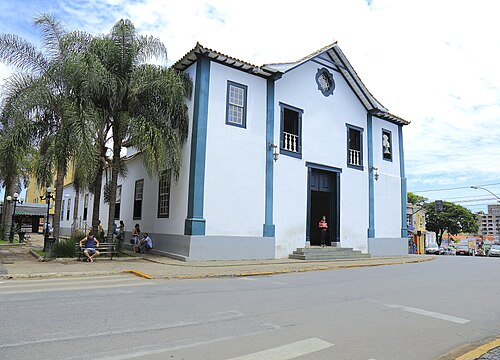
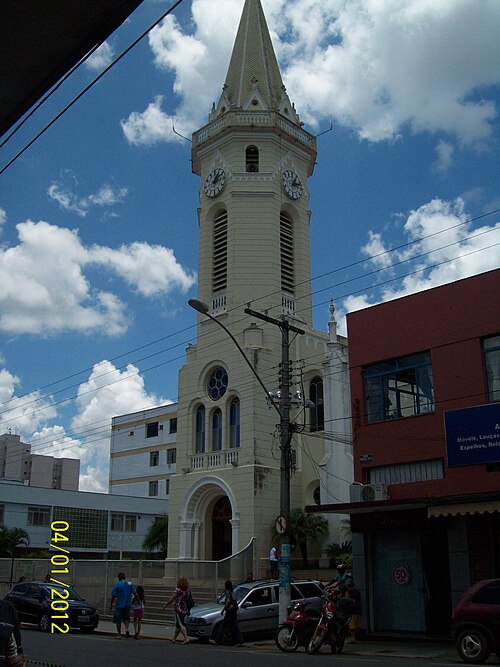
Igreja Matriz de Sant'Ana
Church
Built between 1904 and 1917.
Museu Bi Moreira
Museum
A museum opened in 1983, in the Casa da Cultura.
Museu de História Natural
Museum
A natural history collection linked to the city's academic life.
Praça Dr. Augusto Silva
Square
Opened in 1908; hosts the art and craft fair on Sundays.
Cachoeira dos Ipês
Waterfall
A natural attraction in the municipality.
Parque Ecológico Quedas do Rio Bonito
Nature
A park with waterfalls.
Serra da Bocaina
Nature
The highest point in the municipality.
Lago da Usina do Funil
Lake
A reservoir formed by the plant completed in 2002.
Locomotiva Baldwin
Railway
A preserved steam locomotive, a reminder of the railway past.
Heritage
- Igreja de Nossa Senhora do Rosário · Church built from 1751 to 1754
- Centro Oeste and Costa Pinto railway stations · A reminder of the railway junction
- Casa da Cultura Bi Moreira · Home of the museum opened in 1983
Nature
- Serra da Bocaina · The highest point in the municipality
- Quedas do Rio Bonito · An ecological park with waterfalls
- Cachoeira do Faria · A waterfall in the municipality
Rivers and waters
- River basin: Rio Grande
- Rivers: Rio Capivari, Ribeirão Vermelho, Ribeirão Água Limpa
- Springs: The Capivari River rises in the Serra da Chapada das Perdizes, in Carrancas, and flows into the Grande River.
Climate
- Type: Highland tropical
Typical food
- Cheese · Theme of the Expoqueijo, in July
Chefs from Lavras
- Renato Pacheco · Programa Espia Só (EPTV). Chef and TV host. Food engineer from UFLA.
Flavors of Minas: typical dishes and chefs
Festivals and events
- Encontrão Regional das Embaixadas de Santos Reis (Jan) · A gathering of folias de reis (Epiphany carol groups)
- Lavras Rodeo Festival (May) · Rodeo, also held in August
- Expoqueijo (Jul) · Cheese fair
- Sant'Ana Show (Jul) · The patron saint's festival, on July 26
- Festa do Homem do Campo (Sep) · Rural festival
- Semana da Capoeira (Nov) · Capoeira events
Fun facts
- The motto 'terra dos ipês e das escolas' (land of ipê trees and schools) was coined by journalist Jorge Duarte.
- Lavras was one of the few inland cities in Brazil with a streetcar system.
- The city has a strong Italian influence, with more than 200 families of Italian descent, and a significant Lebanese community.
- American football has been played here since the early 20th century, brought by American missionaries to the Instituto Evangélico.
Getting there
- Belo Horizonte · 237 km by road
Notable people from Lavras
- Carlos Luz · President of the Republic, linked to Lavras
- Rubem Alves · Writer, linked to Lavras
- Fábio de Melo · Priest and singer, linked to Lavras
- Wanderléa · Singer, linked to Lavras
- Francisco Antônio de Sales · Politician of the Old Republic
- Alemão e Cláudio Caçapa · Soccer players linked to the town
People born in Lavras
- Adjamar Verissimo de Oliveira · Político brasileiro · b. 1946
- Alerrandro Barra Mansa Realino de Souza · Futebolista brasileiro · b. 2000
- Alessandro Furtado Silva · Político brasileiro · b. 1970
- Alisson Magno Mattioli · Político do Brasil · b. 1971
- Aloísio Teixeira Garcia · Brazilian politician · 1944–2024
- Ana Paula Henkel · Jogadora de voleibol e comentarista política · b. 1972
- Anderson Marques · Político do Brasil · b. 1969
- Antero de Andrade Botelho · Brazilian politician · 1873–1939
- Antonio Marcos Possato · Político brasileiro · b. 1953
- Antônio Carvalho Filho · Brazilian journalist · 1946–2008
- Antônio Claret dos Santos · Político brasileiro · b. 1968
- Antônio Silva · Político brasileiro, prefeito de Varginha · b. 1942
- Aparecida Lino da Silva · Política brasileira · b. 1976
- Aristides Silva Filho · Político do Brasil · b. 1972
- Billy Gammon · Brazilian missionary · 1916–1974
- Brinner Henrique Santos Souza · Futebolista brasileiro · b. 1987
- Carlito Maia · Brazilian politician · 1924–2002
- Carlos Lindomar de Sousa · Político brasileiro · b. 1975
- Cláudio Caçapa · Futebolista brasileiro · b. 1976
- Cássio van den Berg · Brazilian botanist
- Célio de Oliveira · Brazilian politician
- Daiana Garcia · Política brasileira · b. 1989
- Davy Moraes · Jogadora de voleibol brasileira · b. 1997
- Dehon Junio de Morais · Político do Brasil · b. 1969
- Diego Eduardo Ferreira Biavati · Militar brasileiro · b. 1981
- Dâmina de Carvalho Pereira · Política brasileira · b. 1952
- Débora Gomez · Actriz brasileira · b. 1981
- Edmar Bento de Souza · Político do Brasil · b. 1964
- Edson Alves de Abreu · Político brasileiro · b. 1958
- Edson Rezende · n. 1997
- Eduardo Ribeiro · Meio-fundista · b. 2001
- Eleonora Menicucci · Socióloga brasileira · b. 1944
- Elias Freire Filho · Político brasileiro · b. 1963
- Elias Murad · Brazilian politician · 1924–2013
- Evandro Castanheira Lacerda · Político do Brasil · b. 1965
- Evandro Oliveira Miranda · Político brasileiro · b. 1984
- Evaristo Scorza · 1899–1969
- Everton Lemos · Futebolista brasileiro · b. 1987
- Firmino Costa · Philologist · 1869–1939
- Francisco Carlos de Jesus · Político do Brasil · b. 1969
- Francisco de Oliveira Souto · Político brasileiro · b. 1943
- Fábio Cherem · Político brasileiro · b. 1968
- Gian Danton · Brazilian journalist
- Gil Vilela · Brazilian politician
- Guito Show · Brazilian singer, songwriter, actor and instrumentalist
- Iriny Lopes · Política brasileira · b. 1956
- Januário Garcia Leal Sobrinho · Explorer · 1788–1868
- Jerônimo de Melo Pereira e Sousa
- Joaquim Ferreira da Silva Chaves · Brazilian military officer · 1812–1885
- Joaquim Garcia Leal · Explorador · b. 1790
- Johnny Meg do Nascimento Osório · Futebolista brasileiro · b. 1985
- Jose Cherem · Político brasileiro · b. 1969
- José Bento da Silva · Político do Brasil · b. 1965
- José Carlos Silvério
- José Hugo Castelo Branco · Brazilian politician · 1926–1988
- José Marcus Cherém · Brazilian politician
- José Maurício de Andrade · Brazilian politician · 1913–2011
- José Márcio Rocha Faria · Político do Brasil · b. 1964
- José Orlando Alves · Compositor brasileiro · b. 1970
- João Alves de Gouveia
- João Batista de Abreu · Economista · b. 1943
- João Paulo Felizardo · Político brasileiro · b. 1987
- Luciano Fernandes de Melo · Político do Brasil · b. 1971
- Magno de Andrade · Futebolista brasileiro · b. 1987
- Marcelle · Jogadora de voleibol brasileira · b. 1976
- Marcelle Mendes · Disambiguation page
- Marcos Cherem · Político do Brasil · b. 1966
- Marcos Peixoto · Brazilian politician
- Monique Helena Gervásio de Jesus · n. 2001
- Mozar Terra · Brazilian pianist · 1950–2006
- Murilo Felisberto · Brazilian journalist · 1939–2007
- Murilo Paiva
- Nilson Naves · Brazilian judge, former justice of the Superior Court of Justice
- Oliver Thiago · Lutador de artes marciais mistas · b. 1990
- Orestes Júnior Alves · Futebolista brasileiro · b. 1981
- Paulo Anchieta Veloso Pinto · Jogador de voleibol brasileiro · b. 1976
- Paulo Octávio · Empresário e ex-político brasileiro · b. 1950
- Ricardo Rogério de Brito · Futebolista brasileiro · b. 1961
- Ronielle Faria Gomes · Futebolista brasileiro · b. 1977
- Rui Haddad
And 6 more names in Notable people of Minas Gerais.
City hall
- Mayor: Jussara Menicucci (Jussara Menicucci de Oliveira) (PSD), term 2025–2028
- Address: Avenida Doutor Sílvio Menicucci, 1575, Presidente Kennedy, Lavras, MG, CEP 37203-696
- Phone: (35) 3694-4000
- Website: www.lavras.mg.gov.br
Frequently asked questions
Where is Lavras?
Lavras is a municipality in the state of Minas Gerais, Brazil, in the Southern Minas region, 237 km from Belo Horizonte.
What is there to do in Lavras?
The attractions of Lavras include Igreja de Nossa Senhora do Rosário, Igreja Matriz de Sant'Ana, Museu Bi Moreira, Museu de História Natural, Praça Dr. Augusto Silva, Cachoeira dos Ipês.
What is the population of Lavras?
Lavras has about 105 thousand inhabitants in an area of 565 km².
What is the typical food of Lavras?
Queijo (Theme of the Expoqueijo, in July).
How do you get to Lavras?
Belo Horizonte: 237 km by road.
Who was born in Lavras?
Notable people from Lavras include Carlos Luz, Rubem Alves, Fábio de Melo, Wanderléa, Francisco Antônio de Sales, Alemão e Cláudio Caçapa, Adjamar Verissimo de Oliveira (brazilian politician), Alerrandro Barra Mansa Realino de Souza (brazilian footballer).
Which tourism region is Lavras part of?
Lavras is part of IGR Região Encantos de Minas, one of the 47 official tourism regions of Minas Gerais, with 13 municipalities.
What are the festivals of Lavras?
Encontrão Regional das Embaixadas de Santos Reis (Jan), Lavras Rodeo Festival (May), Expoqueijo (Jul), Sant'Ana Show (Jul), Festa do Homem do Campo (Sep), Semana da Capoeira (Nov).
What are people from Lavras called?
People born in Lavras are called lavrense.
Towns near Lavras
- Ribeirão Vermelho · 9 km in a straight line
- Ijaci · 12 km in a straight line
- Itumirim · 15 km in a straight line
- Ingaí · 19 km in a straight line
- Perdões · 20 km in a straight line
- Nepomuceno · 24 km in a straight line
- Ibituruna · 28 km in a straight line
- Cana Verde · 31 km in a straight line