Salinas, Minas Gerais
National Capital of Cachaça · Northern Minas
Salinas is in the Norte de Minas region, in the Alto Rio Pardo, and has about 40,000 inhabitants. The city is known for its alembic-distilled cachaça (sugarcane spirit) and received the title of National Capital of Cachaça in 2018. Every year it hosts the Festival Mundial da Cachaça. The Museu da Cachaça tells the story of the drink. The climate is semi-arid, with rainfall concentrated between October and March.
Salinas at a glance
- Population: 40 thousand
- Area: 1.887 km²
- Elevation: 471 m
- Distance from Belo Horizonte: 640 km
- Demonym: salinense
- Founded: 1880
- Region: North and Northwest
- Tourism region: IGR Cachaça
- Area code: 38
- IBGE code: 3157005
Salinas is part of the tourism region IGR Cachaça.
History
Settlement followed the Caminho da Bahia. Around 1698, Antônio Luís dos Passos found rock salt deposits on the banks of the Salinas river, which gave the place its name. The first houses appeared around 1711, and the region boosted cattle ranching.
The chapel of Santo Antônio became a district of Rio Pardo de Minas in 1833. The municipality was created in 1880, and the first City Council was installed on January 19, 1883. The town was raised to city status in 1887. In 1923, the name Santo Antônio de Salinas was shortened to just Salinas.
The cachaça tradition came with the Bahians who settled the region. From the 1940s on, its quality production gained fame, and Salinas came to stand out among cachaça-producing regions. Federal law no. 13,773, of December 19, 2018, gave the city the title of National Capital of Cachaça.
Timeline
- 1698 · Discovery of rock salt on the banks of the Salinas river, around this date
- 1833 · The chapel of Santo Antônio becomes a district of Rio Pardo de Minas
- 1880 · Creation of the municipality
- 1883 · Installation of the first City Council
- 1887 · The town is raised to city status
- 1923 · The name changes from Santo Antônio de Salinas to Salinas
- 2002 · First edition of the Festival Mundial da Cachaça
- 2012 · Opening of the Museu da Cachaça
- 2018 · Salinas receives the title of National Capital of Cachaça by federal law
Things to do in Salinas: attractions
Museu da Cachaça
Museum · Avenida Antônio Carlos, 1250, Casa Blanca
Opened in December 2012, it tells the story of the drink in rooms such as the Bottle Room, with more than 2,200 bottles, and the Mills Room. It has a library, a restaurant and a tasting area.
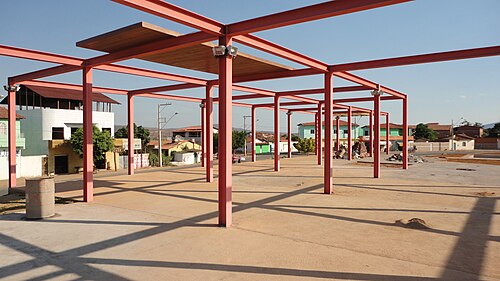
Exhibition Park
Square · Salinas
Hosts the Festival Mundial da Cachaça, which drew about 30,000 people in 2023.
Rio Salinas
Nature
River that runs through the town and gave the municipality its name.
Heritage
- Former Public Jail · 1922 building on Praça Floriano Peixoto, protected by the municipality. Restored in 2010, it houses the Fundação Municipal de Cultura.
- City Hall · Building at Rua Clemente Ladeia, 64, downtown. Protected by the municipality.
- Fórum · Building protected by the Salinas town government.
- Folia de Reis de Valdir Redondo · Folia from the locality of Floresta. Registered by IEPHA as part of the Folias de Minas.
Nature
- Rio Salinas · Rises in Taiobeiras, runs through Salinas and flows into the Tabocas River, in the Jequitinhonha basin.
Rivers and waters
- River basin: Pardo (Alto Rio Pardo) River Basin
- Rivers: Rio Salinas, Rio Pardo
Climate
- Type: Semi-arid
- Winter: Dry, with cooler nights.
- Summer: Hot, with rain from October to March.
- Best time to visit: July, for the Festival Mundial da Cachaça
Typical food
- Alembic cachaça · The city's main product, with about 50 stills and 25 with the Geographical Indication seal.
- Requeijão · Creamy cheese, a traditional product of the local economy.
- Sun-dried beef (carne de sol) · Salted, sun-cured beef, a typical dish of the region.
Festivals and events
- Festival Mundial da Cachaça (Jul) · Held since 2002, it brings together producers, tasters and companies. In 2024 it ran from July 12 to 14.
- Saint Anthony and the June festivals (Jun) · The patron saint is celebrated on June 13, a municipal holiday.
- Corrida e Caminhada de Salinas (Jun) · Takes place on June 26.
Fun facts
- Salinas has been the National Capital of Cachaça by federal law since 2018.
- Havana was the city's first registered cachaça.
- The Museu da Cachaça has a 9-meter wall with more than 2,200 bottles from 54 brands.
- The city's name comes from the salt found on the banks of the Salinas river.
Getting there
- Belo Horizonte · 640 km by road, according to DER-MG.
- Rodovia BR-251 · Runs through the town's rural area, near the airport.
- Aeroporto de Salinas · Located 10.5 km from downtown, with access via BR-251.
Districts
- Ferreirópolis
- Nova Fátima de Salinas
- Nova Matrona
Notable people from Salinas
- Coronel Idalino Ribeiro · Political boss for more than forty years (1879–1973) and executive agent from 1918 to 1930
- Antônio dos Anjos da Silva Sobrinho · First president of the town council and first executive agent of the municipality
- Geraldo Paulino Santana · Nephew of Idalino Ribeiro, he defeated his uncle's candidate in 1959
- Antônio Luís dos Passos · Bandeirante who found the salt deposits on the Salinas River
People born in Salinas
- Adelino Pereira Dias · Brazilian politician
- Alcides Neres dos Santos · Político do Brasil · b. 1958
- Emanuel Messias de Oliveira · Padre católico, bispo católico · b. 1948
- Geraldo Paulino Santanna · Brazilian politician
- Giovane Pereira de Melo · Padre católico, bispo católico · b. 1959
- José Antônio Prates · Brazilian politician
- José Chaves Ribeiro · Brazilian lawyer
- Luiz Flávio Silverio Silva · Futebolista brasileiro · b. 2000
- Mateus Henrique · Futebolista brasileiro · b. 2002
- Petrony Santiago Barros · Futebolista brasileiro · b. 1980
- Procópio Cardoso Neto · Futebolista brasileiro · b. 1939
- Péricles Ferreira dos Anjos · Brazilian politician
- Ropsom Neres Corsino · Político brasileiro · b. 1957
- Túlio Flores · Lexicógrafo e esperantista brasileiro · b. 1956
City hall
- Mayor: Joaquim Neres Xavier Dias (Kinca Dias) (PDT), term 2025–2028
- Address: Praça Moisés Ladeia, 64, Centro, Salinas, MG, CEP 39560-000
- Phone: (38) 3841-1513
- Opening hours: Monday to Friday, 7:00 to 17:00
- Website: www.salinas.mg.gov.br
Frequently asked questions
Where is Salinas?
Salinas is a municipality in the state of Minas Gerais, Brazil, in the North and Northwest region, 640 km from Belo Horizonte.
What is there to do in Salinas?
The attractions of Salinas include Museu da Cachaça, Parque de Exposições, Rio Salinas.
What is the population of Salinas?
Salinas has about 40 thousand inhabitants in an area of 1.887 km².
What is the typical food of Salinas?
Alembic cachaça (The city's main product, with about 50 stills and 25 with the Geographical Indication seal); Requeijão (Creamy cheese, a traditional product of the local economy); Carne de sol (Salted, sun-cured beef, a typical dish of the region).
When is the best time to visit Salinas?
July, for the Festival Mundial da Cachaça. The climate is semi-arid.
How do you get to Salinas?
Belo Horizonte: 640 km by road, according to DER-MG.. Rodovia BR-251: Runs through the town's rural area, near the airport.. Aeroporto de Salinas: Located 10.5 km from downtown, with access via BR-251..
Who was born in Salinas?
Notable people from Salinas include Coronel Idalino Ribeiro, Antônio dos Anjos da Silva Sobrinho, Geraldo Paulino Santana, Antônio Luís dos Passos, Adelino Pereira Dias (brazilian politician), Alcides Neres dos Santos (politician of brazil), Emanuel Messias de Oliveira (catholic priest, catholic bishop), Geraldo Paulino Santanna (brazilian politician).
Which tourism region is Salinas part of?
Salinas is part of IGR Cachaça, one of the 47 official tourism regions of Minas Gerais, with 8 municipalities.
What are the festivals of Salinas?
Festival Mundial da Cachaça (Jul), Santo Antônio e festas juninas (Jun), Corrida e Caminhada de Salinas (Jun).
What are people from Salinas called?
People born in Salinas are called salinense.
Towns near Salinas
- Novorizonte · 21 km in a straight line
- Fruta de Leite · 26 km in a straight line
- Rubelita · 26 km in a straight line
- Padre Carvalho · 31 km in a straight line
- Taiobeiras · 41 km in a straight line
- Josenópolis · 47 km in a straight line
- Coronel Murta · 50 km in a straight line
- Curral de Dentro · 54 km in a straight line