Barão de Cocais, Minas Gerais
Aleijadinho's Mother Church and the Gongo Soco mines · Quadrilátero Ferrífero
Barão de Cocais began as the settlement of Morro Grande, at the foot of a large hill, on the 18th-century gold route. The Matriz de São João Batista is considered Aleijadinho's first architectural design and is listed by IPHAN. In the district of Cocais, colonial churches, quitandas (homemade baked goods) and goiabada cascão (a firm guava paste) keep tradition alive. The town also preserves the history of the Gongo Soco mine, worked by the English in the 19th century, and waterfalls in the Serra da Cambota.
Barão de Cocais at a glance
- Population: 32 thousand
- Area: 340 km²
- Elevation: 791 m
- Distance from Belo Horizonte: 101 km
- Demonym: cocaiense
- Founded: 1943
- Region: Greater BH and Central
- Tourism region: IGR Ouro
- Area code: 31
- IBGE code: 3105400
Barão de Cocais is part of the tourism region IGR Ouro.
History
In the early 18th century bandeirantes followed the Rio São João and set up a camp called Macacos, with a small chapel. Because it sat at the foot of a long hill, the place came to be called Morro Grande (Big Hill). In 1745 the stonemason Bitencourt found gold in the region's streams, beginning the history of Gongo Soco.
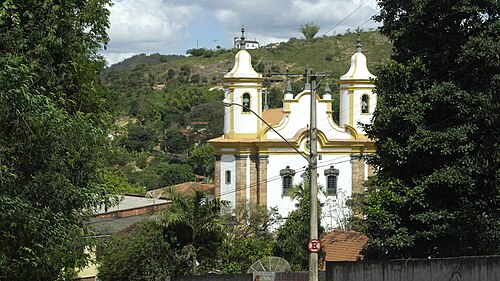
Construction of the Matriz de São João Batista began in 1764 and was finished in 1785. The design is attributed to Aleijadinho, who also carved the image of the patron saint, and the ceiling painting is attributed to Mestre Ataíde.
In 1825 the Gongo Soco mine was sold by the Barão de Catas Altas to English investors from Cornwall. The English company operated there from 1826 to 1856, and a small English cemetery still survives atop a hill.
The district of Morro Grande belonged to Santa Bárbara until December 31, 1943, when it became a municipality named Barão de Cocais, in honor of José Feliciano Pinto Coelho da Cunha. Steelmaking and iron mining shaped the 20th century. In 2019 the Sul Superior dam at the Gongo Soco mine went on maximum alert and residents were evacuated from the risk zone.
Timeline
- 1713 · Bandeirantes found the settlement of Macacos, later Morro Grande
- 1745 · Gold is found in the Gongo Soco area
- 1752 · Creation of the district of Morro Grande
- 1764 · Construction of the Matriz de São João Batista begins
- 1785 · Completion of the Matriz
- 1826 · The English begin working the Gongo Soco mine
- 1939 · IPHAN lists the Matriz and two churches in Cocais
- 1943 · Independence from Santa Bárbara under the name Barão de Cocais
- 2016 · Iron ore operations at Gongo Soco come to an end
- 2019 · Gongo Soco dam on maximum alert and residents evacuated
Things to do in Barão de Cocais: attractions
Matriz de São João Batista
Church · Town center
Church built from 1764 to 1785 with gilded altars and towers set diagonally to the nave. Listed by IPHAN in 1939.
District of Cocais
Historic district · Cocais
Former colonial village with a historic core protected by the municipality since 2007, on the Estrada Real.
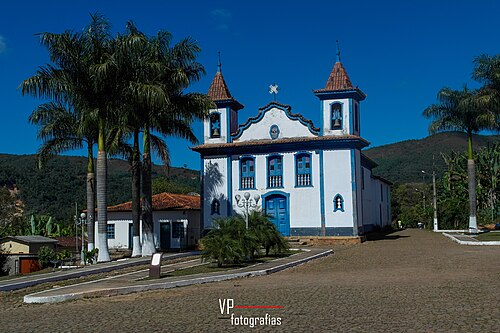
Capela de Sant'Ana
Church · Cocais
18th-century chapel in Cocais, listed by IPHAN in 1939.
Igreja de Nossa Senhora do Rosário dos Pretos
Church · Cocais
Church of a former brotherhood of enslaved and freed people, with Baroque and Neoclassical features. Listed by IPHAN in 1939.
Cachoeira da Cambota
Waterfall · Serra da Cambota
Falls on the São Miguel stream with natural showers and cold-water pools.
Cachoeiras da Serra da Conceição
Waterfall · Serra da Conceição
Falls over rock walls more than 30 m high, popular for rappelling, canyoning and hiking.
Sítio Arqueológico Pedra Pintada
Archaeological site · Serra da Conceição
Rock paintings about 6,000 years old on three large panels, at an altitude of about 1,250 m.
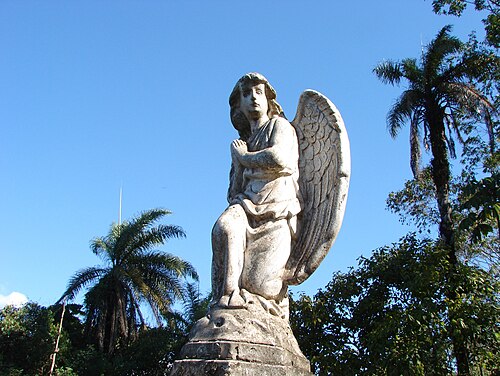
Cemitério dos Ingleses de Gongo Soco
Historic site · Gongo Soco
Ten gravestones atop a hill, some with inscriptions in English, from the era of British mining.
Heritage
- Igreja Matriz de São João Batista · Listed by IPHAN in 1939, the first design attributed to Aleijadinho
- Igreja de Nossa Senhora de Sant'Ana, em Cocais · Listed by IPHAN in 1939
- Igreja de Nossa Senhora do Rosário, em Cocais · Listed by IPHAN in 1939
- Núcleo Histórico Urbano de Cocais · Protected by municipal listing since 2007
- Way of making goiabada cascão · Intangible heritage of the municipality
Nature
- Serra da Cambota · Mountain range with waterfalls and the municipality's main water source
- Serra do Garimpo · Watershed between the Piracicaba and Rio das Velhas basins
- Serra da Conceição · Rock walls, waterfalls and the Pedra Pintada rock art site
Rivers and waters
- River basin: Doce River (Piracicaba River sub-basin), with a western part in the Velhas River basin
- Rivers: Rio São João, Rio Santa Bárbara, Córrego São Miguel
Climate
- Type: Highland tropical (Cwa)
Typical food
- Goiabada cascão (rustic guava paste) · A sweet from Cocais whose traditional preparation is intangible heritage of the municipality
- Quitandas (baked treats) · Rosquinhas, cookies, cakes and breads made by families in Cocais
- Queijo Minas Artesanal · Produced in the Entre Serras da Piedade ao Caraça region
- Pork ribs with ora-pro-nóbis · A country dish (pork ribs with a leafy green) served at the Cocais festivals
Festivals and events
- Feast of São João (Jun) · Festival of the town's patron saint
- Festa da Quitanda e Festival da Goiabada (Apr) · In Cocais, with stalls of quitandas, country food and goiabada cascão
- Festa dos Pés de Pomba · Traditional town festival
- Street Carnival · Street Carnival in the town
Fun facts
- The English company at Gongo Soco was the first British company in Imperial Brazil.
- In the Gongo Soco cemetery the English were buried in a crouching position, a Cornish tradition.
- The towers of the Matriz are set diagonally to the nave, a rare solution in the Baroque of Minas Gerais.
- Until 1943 the town was called Morro Grande and belonged to Santa Bárbara.
Getting there
- Belo Horizonte · Via BR-381 and MG-436
Districts
- Cocais
Notable people from Barão de Cocais
- Barão de Cocais · José Feliciano Pinto Coelho da Cunha, after whom the town is named, was born and lived in the old Vila de Cocais
- Aleijadinho · Attributed author of the design of the Matriz de São João Batista and of the image of the patron saint
- Mestre Ataíde · Painter credited with the ceiling painting of the Matriz
- Peter Lund · Danish naturalist who studied the Pedra Pintada site in 1843
- Barão de Catas Altas · João Batista Ferreira de Souza Coutinho, who sold Gongo Soco to the English
People born in Barão de Cocais
- Alex de Moraes Gomes · Futebolista brasileiro · b. 1988
- Cláudia Pastor · Jogadora de basquetebol brasileira · b. 1971
- Elvira Komel · Brazilian lawyer, suffragist and feminist
- Felício Pinto Coelho de Mendonça · Brazilian nobleman and military officer · 1789–1833
- Geraldo Cleofas Dias Alves · Brazilian footballer · 1954–1976
- J. D. Vital
- John Charles Morgan · 1838–1903
- José Feliciano Pinto Coelho da Cunha · Brazilian politician · 1792–1869
- Sheslon Lucas Lima Santana · Futebolista brasileiro · b. 1987
- Venâncio José Garcia
- Washington Geraldo Dias Alves · Futebolista brasileiro · b. 1949
City hall
- Mayor: Abade (Geraldo Abade das Dores) (PSD), term 2025–2028
- Address: Avenida Getúlio Vargas, 10, Centro, Barão de Cocais, MG, CEP 35970-000
- Phone: (31) 3837-3060
- Website: www.baraodecocais.mg.gov.br
Frequently asked questions
Where is Barão de Cocais?
Barão de Cocais is a municipality in the state of Minas Gerais, Brazil, in the Greater BH and Central region, 101 km from Belo Horizonte.
What is there to do in Barão de Cocais?
The attractions of Barão de Cocais include Matriz de São João Batista, Distrito de Cocais, Capela de Sant'Ana, Igreja de Nossa Senhora do Rosário dos Pretos, Cachoeira da Cambota, Cachoeiras da Serra da Conceição.
What is the population of Barão de Cocais?
Barão de Cocais has about 32 thousand inhabitants in an area of 340 km².
What is the typical food of Barão de Cocais?
Goiabada cascão (A sweet from Cocais whose traditional preparation is intangible heritage of the municipality); Quitandas (Rosquinhas, cookies, cakes and breads made by families in Cocais); Queijo Minas Artesanal (Produced in the Entre Serras da Piedade ao Caraça region); Costelinha com ora-pro-nóbis (A country dish (pork ribs with a leafy green) served at the Cocais festivals).
How do you get to Barão de Cocais?
Belo Horizonte: Via BR-381 and MG-436.
Who was born in Barão de Cocais?
Notable people from Barão de Cocais include Barão de Cocais, Aleijadinho, Mestre Ataíde, Peter Lund, Barão de Catas Altas, Alex de Moraes Gomes (brazilian footballer), Cláudia Pastor (brazilian basketball player), Elvira Komel (brazilian lawyer, suffragist and feminist).
Which tourism region is Barão de Cocais part of?
Barão de Cocais is part of IGR Ouro, one of the 47 official tourism regions of Minas Gerais, with 18 municipalities.
What are the festivals of Barão de Cocais?
Feast of São João (Jun), Festa da Quitanda e Festival da Goiabada (Apr), Festa dos Pés de Pomba, Carnaval de rua.
What are people from Barão de Cocais called?
People born in Barão de Cocais are called cocaiense.
Towns near Barão de Cocais
- Santa Bárbara · 7 km in a straight line
- Catas Altas · 17 km in a straight line
- São Gonçalo do Rio Abaixo · 17 km in a straight line
- Caeté · 21 km in a straight line
- São Sebastião da Vargem Alegre · 24 km in a straight line
- Bom Jesus do Amparo · 26 km in a straight line
- Nova União · 30 km in a straight line
- Rio Piracicaba · 31 km in a straight line