Caeté, Minas Gerais
Former Vila Nova da Rainha · Serra da Piedade
Caeté is one of the gold towns of Minas, created in 1714 as Vila Nova da Rainha, in the Greater BH area. The region was a stage for the Guerra dos Emboabas (War of the Emboabas) in the early 18th century. Atop the Serra da Piedade stands the basilica of Nossa Senhora da Piedade, patron saint of Minas, with a statue attributed to Aleijadinho. Downtown, the Matriz de Nossa Senhora do Bom Sucesso has been listed by IPHAN since 1938. The town also preserves the house where Israel Pinheiro was born and a tradition in ceramics.
Caeté at a glance
- Population: 39 thousand
- Area: 542 km²
- Elevation: 911 m
- Distance from Belo Horizonte: 56 km
- Demonym: caeteense
- Founded: 1714
- Region: Greater BH and Central
- Tourism region: IGR Ouro
- Area code: 31
- IBGE code: 3110004
Caeté is part of the tourism region IGR Ouro.
History
The name comes from Tupi and is translated as true woods or dense forest. The region was explored from the 1660s on, and its official discovery is attributed to the bandeirante Leonardo Nardez, in 1701. Drawn by gold, people from São Paulo (paulistas) and outsiders (forasteiros) coming mainly from Portugal and Bahia settled the place, and in 1704 construction began on the Igreja do Rosário.
The village was one of the stages of the Guerra dos Emboabas (1707–1709), which pitted paulistas against outsiders and was led by Manuel Nunes Viana. In January 1714 the governor D. Brás Baltasar da Silveira elevated the settlement to Vila Nova da Rainha, formally established on February 14 of that year. The parish of Nossa Senhora do Bom Sucesso was created in 1724, and the current Matriz was built between 1752 and 1758.
Around 1765, according to tradition, Our Lady appeared to a mute girl at the top of the mountain range. There, in 1767, the Portuguese Antônio da Silva Bracarena began the chapel of Nossa Senhora da Piedade, completed in 1778. In 1833 the town was abolished and, in 1840, re-created under the name Caeté. In 1865 it was elevated to city.
At the end of the 19th century, João Pinheiro set up a ceramics factory in Caeté that supplied bricks for the first buildings of Belo Horizonte. His son Israel Pinheiro was born in the town in 1896. In 1960 Minas was consecrated to Nossa Senhora da Piedade, and in 2017 the mountain hermitage received the title of basilica.
Timeline
- 1701 · Bandeirante Leonardo Nardez arrives in the gold region
- 1704 · Construction of the Igreja do Rosário begins
- 1707 · The Guerra dos Emboabas begins, with episodes in the region
- 1714 · Vila Nova da Rainha created
- 1724 · Parish of Nossa Senhora do Bom Sucesso created
- 1767 · Chapel of Nossa Senhora da Piedade begun on the mountain
- 1840 · Town re-created under the name Caeté
- 1865 · Elevated to city
- 1960 · Nossa Senhora da Piedade consecrated patron saint of Minas
- 2017 · The Serra da Piedade hermitage becomes a basilica
Things to do in Caeté: attractions
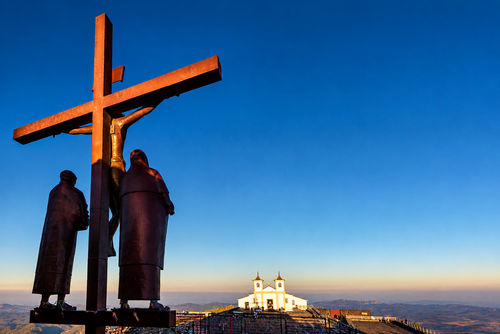
Basílica de Nossa Senhora da Piedade
Church · Alto da Serra da Piedade
An 18th-century hermitage atop the mountain range, called the smallest basilica in the world. It houses the statue of the patron saint of Minas, attributed to Aleijadinho.
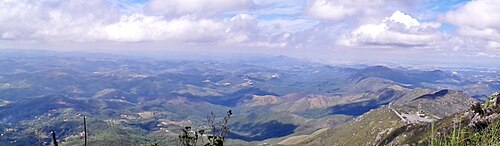
Serra da Piedade
Viewpoint · Border of Caeté with Sabará and Santa Luzia
A 1,746 m mountain range overlooking Greater BH. It is a landscape ensemble listed as heritage by the State.
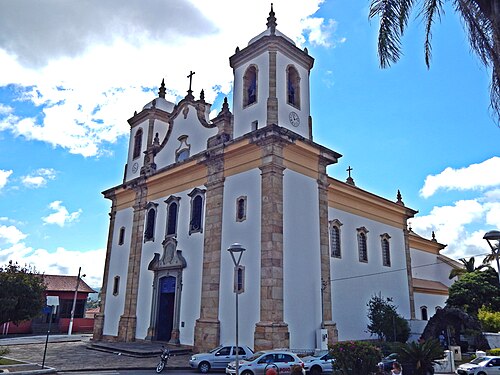
Matriz de Nossa Senhora do Bom Sucesso
Church · Praça João Pinheiro, Centro
Built between 1752 and 1758 in stone masonry, with an altarpiece by José Coelho de Noronha. Listed by IPHAN in 1938.
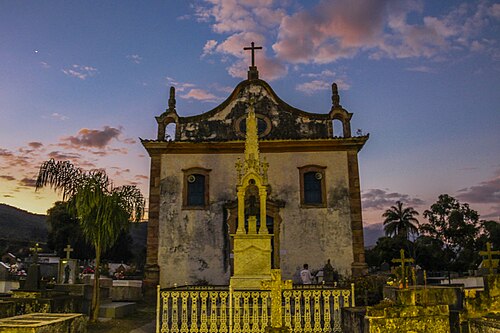
Igreja de Nossa Senhora do Rosário
Church
A church whose construction began in 1704, in the village's earliest years.
Museu Regional de Caeté
Museum
A museum of the Instituto Brasileiro de Museus, reopened in 2019 with IPHAN in attendance.
Museu Casa de João e Israel Pinheiro
Museum · Perto do Centro
The former Solar do Tinoco, residence of João Pinheiro and the house where Israel Pinheiro was born. Reopened in 2026 with the family's collection and ceramics workshops.
Cachoeira de Santo Antônio
Waterfall · Morro Vermelho
A drop of about 10 meters in the district of Morro Vermelho.
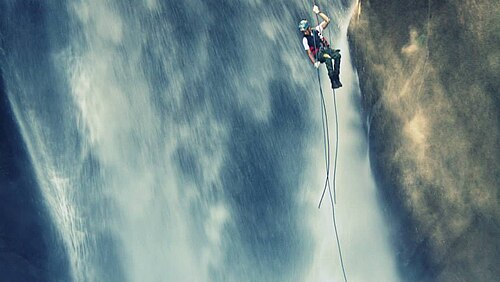
Morro Vermelho
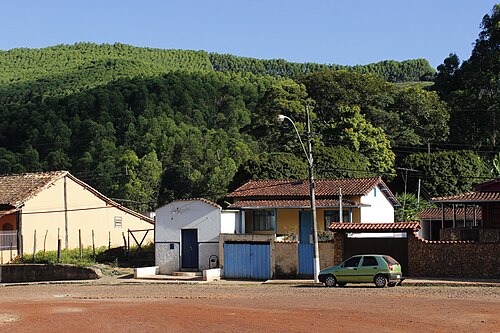
Historic district · About 12 km from the center
A former gold village, a stage of the Guerra dos Emboabas, with the Matriz de Nossa Senhora de Nazaré and 18th-century ruins.
Pedra Branca
Nature
A rock formation popular for climbing.
Rota do Ferro
Trail
A bike trail along the bed of a former Central do Brasil railway branch, linking Caeté to Sabará, Barão de Cocais, and Santa Bárbara.
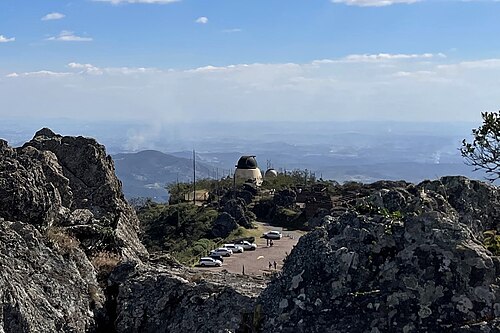
Observatório Astronômico Frei Rosário
Observatory · Serra da Piedade
A UFMG observatory atop the Serra da Piedade, opened in 1972. It has been closed to visitors since the pandemic.
Heritage
- Matriz de Nossa Senhora do Bom Sucesso · Listed by IPHAN in 1938, built between 1752 and 1758
- Landscape Ensemble of Serra da Piedade · State heritage listing, including the basilica, the Casa dos Romeiros, and the Cruzeiro
- Capela de Nossa Senhora da Piedade · Begun in 1767 and completed in 1778 by Antônio da Silva Bracarena
Nature
- Serra da Piedade · A 1,746 m range of iron-bearing rocks, recognized as a geological site
- Serra do Gandarela · A small part of the Parque Nacional da Serra do Gandarela, created in 2014, lies within the municipality
- Cachoeira de Santo Antônio · A drop of about 10 m in Morro Vermelho
Rivers and waters
- River basin: Rio São Francisco (Rio das Velhas sub-basin)
- Rivers: Ribeirão Sabará, Córrego Caeté
Climate
- Type: Highland tropical (Cwa)
Typical food
- Queijo Frei Rosário · Cheese aged for decades in a cave at more than 1,700 m on the Serra da Piedade
Festivals and events
- Jubileu de Nossa Senhora do Bom Sucesso (Feb) · Feast of the parish's patron saint, with processions and Masses around February 16
- Feast of Nossa Senhora da Piedade (Sep) · Pilgrimage to the top of the mountain range on September 15
Fun facts
- The Sociedade Musical Santa Cecília, from Morro Vermelho, is said to be the oldest band in Minas.
- The hermitage on the Serra da Piedade is called the smallest basilica in the world.
- Bricks made in Caeté were used in the first buildings of Belo Horizonte.
- In Morro Vermelho, women keep up the ritual of carrying water to the cruzeiro (large wayside cross) to pray for rain.
- The Matriz do Bom Sucesso is considered the first stone-masonry church in Minas.
Getting there
- Belo Horizonte · About 56 km
Districts
- Antônio dos Santos
- Morro Vermelho
- Penedia
- Rancho Novo
- Roças Novas
Notable people from Caeté
- Israel Pinheiro · Born in Caeté in 1896. First president of Vale, first mayor of the Federal District and governor of Minas
- João Pinheiro · Governor of Minas, son of a mother from Caeté. He founded a ceramics factory in the town and presided over the Town Council in 1899
- Manuel Nunes Viana · Leader of the outsiders in the War of the Emboabas, a resident of the region in the early 18th century
- Antônio da Silva Bracarena · Portuguese builder of the chapel of Serra da Piedade, who is also credited with the Matriz do Bom Sucesso
- Aleijadinho · Attributed author of the image of Nossa Senhora da Piedade, venerated at the top of the mountain range
- Leonardo Nardez · Bandeirante credited with discovering the region, in 1701
People born in Caeté
- Costa e Silva Sobrinho · n. 1892
- Hilário de Gouveia · Oftalmologista · 1843–1923
- José Augusto Ferreira Filho
- João Pinheiro da Silva Filho · Brazilian politician · 1902–1956
- Juberson dos Santos Melo · Político do Brasil · b. 1973
- Luiz de Paula Castro
- Monsenhor Domingos
- Sebastião Teixeira · Cantor lírico brasileiro · b. 1954
- Tamires Dias · Futebolista brasileira · b. 1987
City hall
- Mayor: Alberto Pires (Alberto Nazaré Pires) (Avante), term 2025–2028
- Address: Praça Dr. João Pinheiro, s/n, Caeté, MG, CEP 34800-000
- Phone: (31) 3651-3266
- Website: www.caete.mg.gov.br
Frequently asked questions
Where is Caeté?
Caeté is a municipality in the state of Minas Gerais, Brazil, in the Greater BH and Central region, 56 km from Belo Horizonte.
What is there to do in Caeté?
The attractions of Caeté include Basílica de Nossa Senhora da Piedade, Serra da Piedade, Matriz de Nossa Senhora do Bom Sucesso, Igreja de Nossa Senhora do Rosário, Museu Regional de Caeté, Museu Casa de João e Israel Pinheiro.
What is the population of Caeté?
Caeté has about 39 thousand inhabitants in an area of 542 km².
What is the typical food of Caeté?
Queijo Frei Rosário (Cheese aged for decades in a cave at more than 1,700 m on the Serra da Piedade).
How do you get to Caeté?
Belo Horizonte: About 56 km.
Who was born in Caeté?
Notable people from Caeté include Israel Pinheiro, João Pinheiro, Manuel Nunes Viana, Antônio da Silva Bracarena, Aleijadinho, Leonardo Nardez, Costa e Silva Sobrinho, Hilário de Gouveia.
Which tourism region is Caeté part of?
Caeté is part of IGR Ouro, one of the 47 official tourism regions of Minas Gerais, with 18 municipalities.
What are the festivals of Caeté?
Jubileu de Nossa Senhora do Bom Sucesso (Feb), Festa de Nossa Senhora da Piedade (Sep).
What are people from Caeté called?
People born in Caeté are called caeteense.
Towns near Caeté
- Sabará · 16 km in a straight line
- Raposos · 17 km in a straight line
- Barão de Cocais · 21 km in a straight line
- Nova Lima · 22 km in a straight line
- Santa Luzia · 24 km in a straight line
- Nova União · 24 km in a straight line
- Taquaraçu de Minas · 24 km in a straight line
- Rio Acima · 26 km in a straight line