Sabará, Minas Gerais
Land of jabuticaba and gold · Greater BH
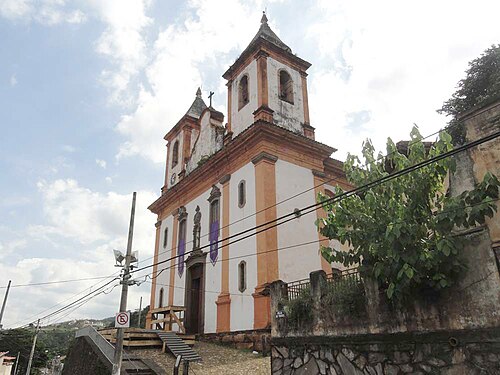
Sabará is one of the oldest towns in Minas Gerais, right next to Belo Horizonte, on the banks of the Rio das Velhas. It was born from gold found in the late 17th century and preserves Baroque churches, fountains and colonial mansions. The Capela de Nossa Senhora do Ó and the Igreja do Carmo, with works by Aleijadinho, are among the highlights. The Museu do Ouro occupies the former Casa de Intendência e Fundição (Royal Treasury and Smelting House). The town is known as the land of the jabuticaba (a native Brazilian berry), with a festival that draws thousands of visitors.
Sabará at a glance
- Population: 129 thousand
- Area: 302 km²
- Elevation: 705 m
- Distance from Belo Horizonte: 18 km
- Demonym: sabarense
- Founded: 1711
- Region: Greater BH and Central
- Tourism region: IGR Ouro
- Area code: 31
- IBGE code: 3156700
Sabará is part of the tourism region IGR Ouro.
History
The name comes from Tupi and refers to a shining mountain range, the legendary Sabarabuçu, which the bandeirantes (colonial explorers) were searching for. In the late 17th century gold was found in the region, in a discovery linked to the bandeirante Borba Gato, and the settlement grew along the banks of the Rio das Velhas.
In 1707 the parish was created and, in 1711, the settlement became the Vila Real de Nossa Senhora da Conceição do Sabará, alongside Vila Rica and Vila do Carmo. In the 18th century the town was one of the richest and most populous in Minas and gained churches such as the Matriz da Conceição, the Capela do Ó and the Igreja do Carmo.
In 1819 the Casa da Ópera, today's Teatro Municipal, opened. In 1823 D. Pedro I gave the town the title of Fidelíssima (Most Faithful), and in 1838 Sabará was raised to the status of city.
The historic center was listed by IPHAN in 1938, and the Museu do Ouro opened in 1946. Today Sabará is part of the Belo Horizonte Metropolitan Region and keeps alive the jabuticaba tradition, recognized as intangible heritage.
Timeline
- 1707 · Parish created
- 1711 · Settlement becomes Vila Real de Nossa Senhora da Conceição do Sabará
- 1717 · Construction of the Capela de Nossa Senhora do Ó begins
- 1819 · Casa da Ópera, today's Teatro Municipal, opens
- 1823 · D. Pedro I grants the title of Fidelíssima
- 1838 · Raised to city status
- 1938 · Historic center listed by IPHAN
- 1946 · Museu do Ouro opens
- 1987 · First Festival da Jabuticaba
Things to do in Sabará: attractions
Capela de Nossa Senhora do Ó
Church · Largo de Nossa Senhora do Ó
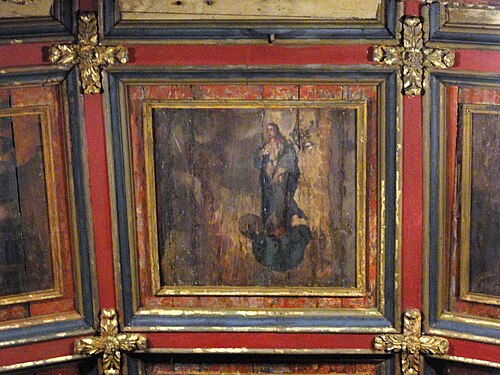
A plain façade and an interior rich in gilded carvings, a jewel of Minas Baroque.
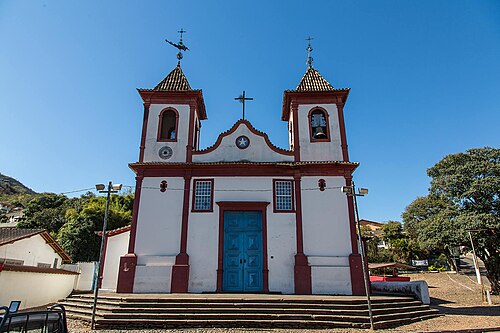
Igreja Matriz de Nossa Senhora da Conceição
Church · Praça Getúlio Vargas, s/n, Siderúrgica
Begun in 1701, it has three naves and restored gilded carvings.
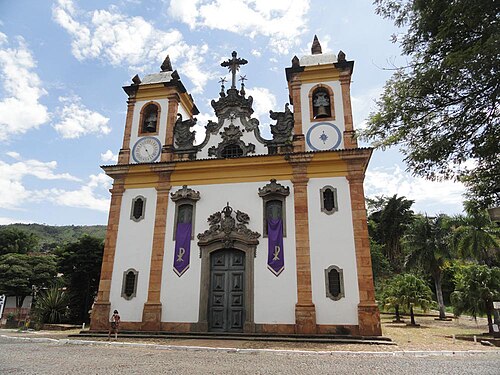
Igreja de Nossa Senhora do Carmo
Church · Rua do Carmo, s/n, Centro
A late-Baroque church with reliefs attributed to Aleijadinho.
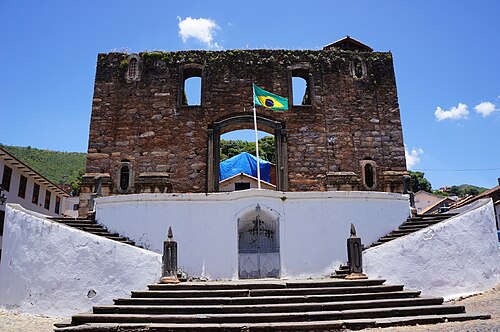
Igreja de Nossa Senhora do Rosário dos Pretos
Church · Praça Delfim Moreira, Centro
Built by enslaved people and left unfinished; the walls show the stages of construction.
Museu do Ouro
Museum · Rua da Intendência, s/n, Centro
The former Casa de Intendência e Fundição, with gold-mining tools and goldsmith pieces.
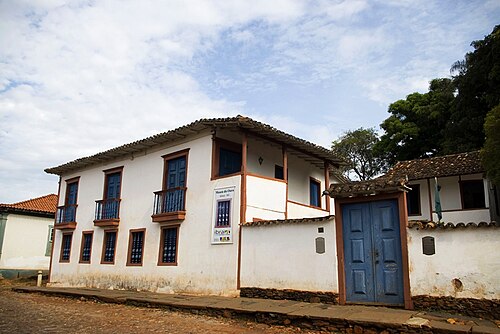
Municipal Theater
Theater · Town center
The former Casa da Ópera, opened in 1819, among the oldest theaters in Brazil.
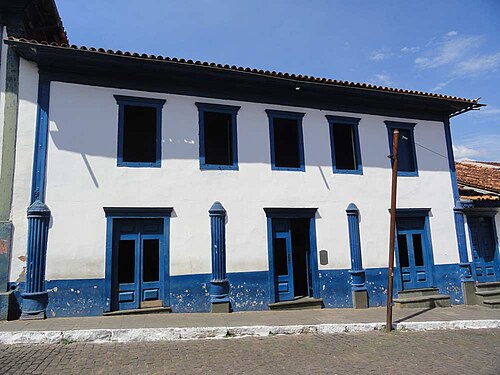
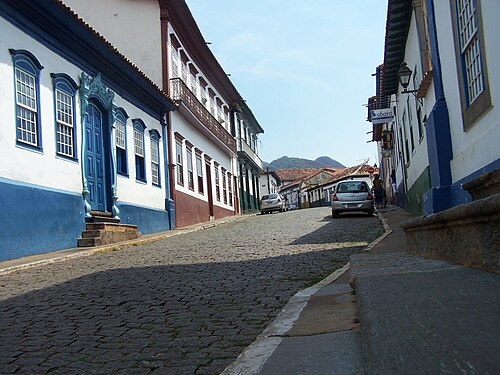
Rua Dom Pedro II
Historic street · Town center
The former Rua Direita, with 18th-century townhouses and the Solar do Padre Correa.
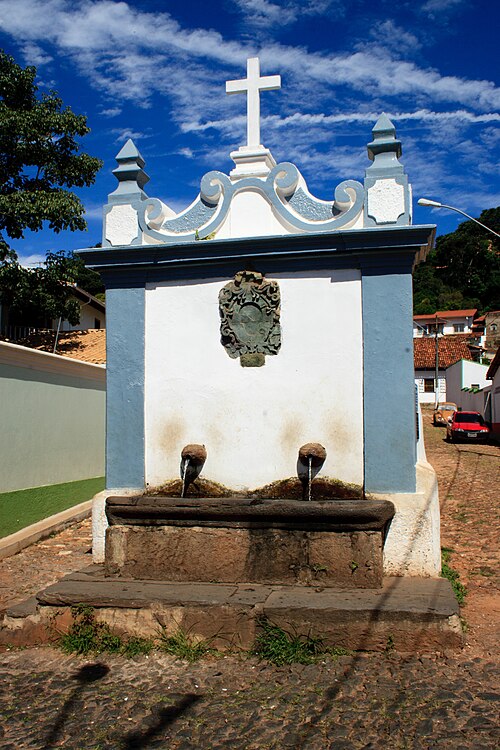
Chafariz do Kaquende
Fountain · Town center
A fountain from 1757, one of the town's three historic fountains.
Igreja de São Francisco de Assis
Church · Largo de São Francisco
A church from 1781, the traditional stage for Semana Santa (Holy Week).
Heritage
- Architectural ensemble of Rua Dom Pedro II · Street listed by IPHAN, with colonial townhouses
- Capela de Nossa Senhora do Ó · Chapel from 1717 with an interior of gilded carvings
- Igreja de Nossa Senhora do Carmo · Listed by IPHAN, with works by Aleijadinho
- Casa de Intendência e Fundição · Home of the Museu do Ouro
- Municipal Theater · The former Casa da Ópera, from 1819
Nature
- Rio das Velhas · The town's main river, tied to the history of gold
Rivers and waters
- River basin: Rio São Francisco (Rio das Velhas sub-basin)
- Rivers: Rio das Velhas, Ribeirão Sabará
Climate
- Type: Tropical
- Winter: Dry and mild
- Summer: Hot and rainy
- Best time to visit: April to September, and November for the Festival da Jabuticaba
Typical food
- Jabuticaba · The town's signature fruit, sold fresh and as liqueurs, jams and sweets
- Ora-pro-nóbis · A traditional leafy green of the local cuisine, with its own festival
Festivals and events
- Holy Week (Apr) · Stations of the Cross up to Morro da Cruz and a Passion play
- Jabuticaba Festival (Nov) · Liqueurs, jams and sweets made from the fruit in the historic center, since 1987
- Ora-pro-nóbis Festival · Food festival held since 1997 in the village of Pompéu
Fun facts
- The town gives a property tax (IPTU) discount for every jabuticaba tree planted.
- Despite its name, the Casa Borba Gato was never the bandeirante's home.
- The Festival da Jabuticaba has been recognized as the town's intangible heritage.
- In the 18th century the town was among the most populous in Minas.
Getting there
- Belo Horizonte · 18 km via BR-262 from downtown BH
Districts
Notable people from Sabará
- Borba Gato · Bandeirante linked to the discovery of gold in the region
- Aleijadinho · Author of works in the Igreja de Nossa Senhora do Carmo
- Padre Correa · Owner of the 1773 manor that hosted D. Pedro I and D. Pedro II
- Basílio de Brito Malheiro do Lago · Informer against the Inconfidência Mineira, he died in Sabará
People born in Sabará
- Alexandre Vieira dos Santos · Futebolista brasileiro · b. 1970
- Amaury Alvès Horta · Futebolista brasileiro · b. 1942
- Andre Luiz Soares · Político brasileiro · b. 1979
- Antônio Barbosa Gomes Nogueira · Brazilian politician
- Antônio Maria de Moura
- Antônio Vaz Pinto Coelho da Cunha · Brazilian politician
- Aníbal Machado · Brazilian writer, footballer, teacher and man of the theater · 1894–1964
- Argemiro Afonso Ramos · Político do Brasil · b. 1954
- Avelino Fóscolo · Brazilian anarchist and writer · 1864–1944
- Claudio Wladimir de Oliveira · Político brasileiro · b. 1968
- Conceição Aparecida Duarte Arruda Sebastião · Política do Brasil · b. 1956
- Cristiano Machado · Brazilian politician · 1893–1953
- Diogenes Gonçalves Fantini · Político brasileiro · b. 1947
- Diogo de Jesus Jardim · Catholic priest, Catholic bishop, deacon · 1730–1796
- Elizabete Conceição Viana · Política brasileira · b. 1958
- Francisco da Assunção e Brito
- Galeão Coutinho
- Geraldo Sergio da Silva · Político do Brasil · b. 1955
- Gileno Julio Ribeiro · Político do Brasil · b. 1960
- Guilherme Guimarães Alves · Político brasileiro · b. 1982
- Hellison Lopes do Nascimento · Político brasileiro · b. 1985
- Humberto Guimarães
- Inácio Antônio de Assis Martins · Brazilian politician · 1839–1903
- Joaquim Cândido Soares de Meireles · Physician · 1797–1868
- Joaquim Gonçalves da Rocha · Brazilian painter, wood-carving gilder and statue flesh-tone painter · 1755–1831
- Joaquim Silvério de Castro Barbosa · Brazilian singer, actor, songwriter and comedian · 1909–1975
- Josue Mendes · Político brasileiro · b. 1971
- Josué de Jesus Silva · Político brasileiro · b. 1975
- José Maria Vaz Pinto Coelho · Brazilian writer · 1836–1894
- José Monteiro de Castro · Brazilian lawyer and politician · 1909–1994
- José Roberto Fernandes · Político brasileiro · b. 1959
- Júlio Ribeiro · Brazilian writer and grammarian · 1845–1890
- Lucas Duarte Neves · Musicista brasileiro · b. 1990
- Luiz Dumont
- Luiza Maria Ferreira Pinto · Política brasileira · b. 1958
- Marcus Aurelio de Oliveira · Político brasileiro · b. 1972
- Maurilio Barbosa da Silva · Político do Brasil · b. 1967
- Melo Viana · 11th Vice President of Brazil · 1878–1954
- Nikolle Correa · Jogadora de voleibol brasileira · b. 1985
- Orozimbo Nonato · Juiz · 1891–1974
- Orózio Belém · Brazilian painter
- Paulo Barbosa da Silva · Brazilian politician · 1790–1868
- Pedro Aihara · Bombeiro militar, professor e político brasileiro · b. 1993
- Reginaldo Ferreira Pinto · Político brasileiro · b. 1967
- Ricardo Antunes Gomes de Oliveira · Político brasileiro · b. 1970
- Sepúlveda Pertence · Brazilian jurist, former Justice of the Supreme Federal Court · 1937–2023
- Vanderlin Martins de Paula · Político brasileiro · b. 1959
- Wander Borges · Político brasileiro · b. 1959
- Welington Duarte Ribeiro · Político do Brasil · b. 1975
City hall
- Mayor: Sargento Rodolfo (Rodolfo Tadeu da Silva) (Republicanos), term 2025–2028
- Address: Rua Dom Pedro II, 72, Centro, Sabará, MG, CEP 34505-000
- Phone: (31) 3672-7672
- Website: www.sabara.mg.gov.br
Frequently asked questions
Where is Sabará?
Sabará is a municipality in the state of Minas Gerais, Brazil, in the Greater BH and Central region, 18 km from Belo Horizonte.
What is there to do in Sabará?
The attractions of Sabará include Capela de Nossa Senhora do Ó, Igreja Matriz de Nossa Senhora da Conceição, Igreja de Nossa Senhora do Carmo, Igreja de Nossa Senhora do Rosário dos Pretos, Museu do Ouro, Teatro Municipal.
What is the population of Sabará?
Sabará has about 129 thousand inhabitants in an area of 302 km².
What is the typical food of Sabará?
Jabuticaba (The town's signature fruit, sold fresh and as liqueurs, jams and sweets); Ora-pro-nóbis (A traditional leafy green of the local cuisine, with its own festival).
When is the best time to visit Sabará?
April to September, and November for the Festival da Jabuticaba. The climate is tropical.
How do you get to Sabará?
Belo Horizonte: 18 km via BR-262 from downtown BH.
Who was born in Sabará?
Notable people from Sabará include Borba Gato, Aleijadinho, Padre Correa, Basílio de Brito Malheiro do Lago, Alexandre Vieira dos Santos (brazilian footballer), Amaury Alvès Horta (brazilian footballer), Andre Luiz Soares (brazilian politician), Antônio Barbosa Gomes Nogueira (brazilian politician).
Which tourism region is Sabará part of?
Sabará is part of IGR Ouro, one of the 47 official tourism regions of Minas Gerais, with 18 municipalities.
What are the festivals of Sabará?
Semana Santa (Apr), Festival da Jabuticaba (Nov), Festival do Ora-pro-nóbis.
What are people from Sabará called?
People born in Sabará are called sabarense.
Towns near Sabará
- Raposos · 9 km in a straight line
- Nova Lima · 11 km in a straight line
- Belo Horizonte · 11 km in a straight line
- Santa Luzia · 15 km in a straight line
- Caeté · 16 km in a straight line
- Rio Acima · 23 km in a straight line
- Vespasiano · 24 km in a straight line
- Contagem · 24 km in a straight line