Itajubá, Minas Gerais
University and industrial town · Home of Wenceslau Braz, in the Sul de Minas
Itajubá sits on the banks of the Rio Sapucaí, in the Sul de Minas region. It grew out of the decline of mining and today lives on industry, higher education, commerce and services. It is home to the Universidade Federal de Itajubá (UNIFEI), the former Escola de Engenharia founded in 1913. The town is the birthplace of president Wenceslau Braz and vice president Aureliano Chaves, and calls itself the Minas Gerais capital of choral singing. Its altitude of 845 m is the level of the Rio Sapucaí.
Itajubá at a glance
- Population: 93 thousand
- Area: 290 km²
- Elevation: 845 m
- Distance from Belo Horizonte: 445 km
- Demonym: itajubense
- Founded: 1848
- Region: Southern Minas
- Tourism region: IGR Caminhos da Mantiqueira
- Area code: 35
- IBGE code: 3132404
Itajubá is part of the tourism region IGR Caminhos da Mantiqueira.
History
In the late 17th century, bandeirantes (colonial explorers) such as Miguel Garcia Velho roamed the region in search of gold. The first settlement, Soledade do Itagybá, is today Delfim Moreira.
When the gold ran out, the parish declined. On March 19, 1819, Father Lourenço da Costa Moreira moved the seat to the top of Morro Ibitira, on the banks of the Sapucaí, where the present-day town was born.
Provincial Law No. 355 of September 27, 1848, created the Vila Boa Vista de Itajubá. On October 4, 1862, the town was granted city status. In 1913 the Escola de Engenharia, today UNIFEI, was established.
Floods of the Sapucaí have marked local history. The one in January 2000 is described as one of the most severe.
Timeline
- 1819 · Father Lourenço da Costa Moreira moves the parish seat to its current location
- 1848 · Creation of the Vila Boa Vista de Itajubá
- 1862 · The town is granted city status
- 1913 · Establishment of the Escola de Engenharia, today UNIFEI
- 2000 · Major flood of the Rio Sapucaí in January
- 2008 · Casa Wenceslau Braz is listed by the State
- 2011 · First edition of FICA, Festival Itajubense de Cultura e Arte
Things to do in Itajubá: attractions
Casa Wenceslau Braz (Casa Rosada)
Museum · Praça Wenceslau Brás, Centro
Eclectic-style residence from the 1910s, nicknamed Casa Rosada by Assis Chateaubriand. Listed by the State in 2008.
Igreja Matriz de Nossa Senhora da Soledade
Church
The town's mother church, tied to the origins of the parish.
Santuário de Nossa Senhora da Piedade
Church
The town's Catholic shrine.
Reserva Biológica da Serra dos Toledos
Nature
Reserve closed to visitors, but with attractions in the surrounding area.
Cachoeira da Serra dos Toledos
Waterfall
Waterfall in the mountain area.
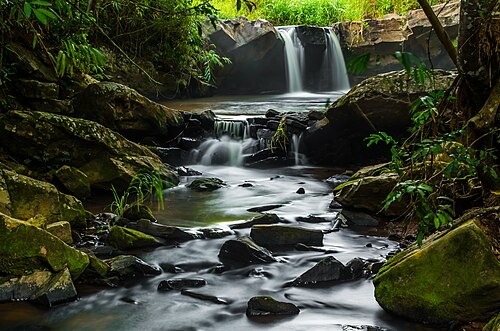
Horto Florestal Anhumas
Nature
Green area for walks and time in nature.
Pedra Aguda
Nature
Rock formation in the municipality.
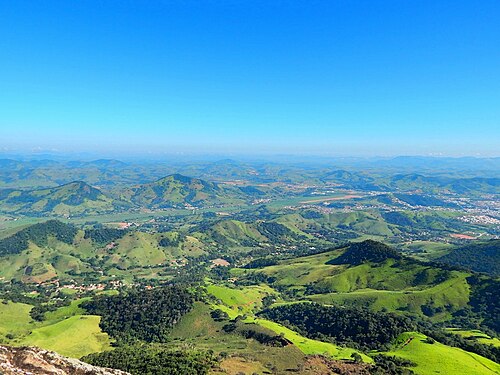
Museu Municipal Wenceslau Braz
Museum
Museum dedicated to local memory.
Heritage
- Casa Wenceslau Braz · Eclectic-style residence from the 1910s, listed by the State in 2008.
Nature
- Serra dos Toledos · Biological reserve with a waterfall nearby.
- Pedra de Santa Rita · Highest point in the municipality, at 1,915 m.
Rivers and waters
- River basin: Sapucaí River (Grande River basin)
- Rivers: Rio Sapucaí, Rio Lourenço Velho, Ribeirão Anhumas, Ribeirão Zé Pereira, Ribeirão Piranguçu, Ribeirão Água Preta
Climate
- Type: Temperate, with sudden temperature swings
- Winter: Cold, with frequent frost
- Summer: Rainy, with peak rainfall in December and January
- Best time to visit: April to September, the driest season
Typical food
- Banana · The municipality's main farm product.
- Specialty coffee · Grown on a smaller scale in the region.
Festivals and events
- FICA (Yearly) · Festival Itajubense de Cultura e Arte, held since 2011.
- FELIC (Yearly) · Annual festival devoted to choral singing.
- Festas de Nossa Senhora do Rosário e São Benedito (Oct) · Feature the Congada (Afro-Brazilian procession and dance).
Fun facts
- Itajubá calls itself the Capital Mineira do Canto Coral (Minas Gerais Capital of Choral Singing), with more than 20 choirs.
- The town is the birthplace of UNIFEI, established in 1913 as the Escola de Engenharia.
- In 2023 the Senate approved a bill giving the municipality the title of National Capital of Helicopter Production.
- It has one of the largest industrial districts in the Sul de Minas.
Getting there
- Belo Horizonte · 443 km via BR-381 and BR-459
Districts
Notable people from Itajubá
- Wenceslau Braz · President of the Republic, linked to the town; his house is the Casa Rosada
- Aureliano Chaves · Vice President of the Republic
- José Roberto Arruda · Former governor of the Federal District
- Vital Brazil · Scientist; spent part of his early childhood in town
- Diego Costa · Soccer player
- Massoud Nassar Neto · Six-time Brazilian motocross champion
People born in Itajubá
- Alaor Azevedo
- Ambrósio Pinto · Brazilian politician
- Antônio Aureliano Sanches de Mendonça · Político brasileiro · b. 1958
- Antônio de Souza Vianna · Brazilian painter
- Bené Guedes · Brazilian politician
- Bruno Pedralva · Médico e político brasileiro · b. 1984
- Cristian Dimitrius · Fotógrafo, naturalista, apresentador de televisão · b. 1975
- Cynthia Luz · Brazilian singer and rapper
- Diva Goulart · Pintor · b. 1932
- Edson Oriolo · Bispo católico, padre católico, teólogo · b. 1964
- Esper Kallás · Investigator
- Eugênio Mohallem
- Fabrício Alberto Correia · Político do Brasil · b. 1977
- Fred Röhner · Historiador, professor universitário, hispanista · b. 1977
- Frederico Schumann · Pharmacist and deputy · 1847–1917
- Fructuoso Vianna · Brazilian composer · 1896–1976
- Ivan Vilela · Músico brasileiro · b. 1962
- José Armelim Bernardo Guimarães · Writer, poet · 1915–2004
- José Brás Pereira Gomes · Brazilian politician · 1894–1982
- José Remuzat Rennó · Brazilian politician
- José Ricardo Cortez · Empresário e político brasileiro · b. 1972
- Júlio César Leal · Futebolista brasileiro · b. 1951
- Leandro Fernandes Dias · Futebolista brasileiro · b. 1985
- Luís Gonzaga do Nascimento e Silva · Brazilian lawyer and politician · 1915–2003
- Maria de Paiva Pereira
- Maria Eugênia Montes Castanho · Pedagoga e pesquisadora brasileira · b. 1946
- Maria Pereira Gomes · 10.ª Primeira-dama da República Federativa do Brasil
- Marthus Mathias · Brazilian actor and voice actor
- Miguel Ortega · Futebolista paraguaio · b. 1917
- Myllena Varginha · Músico · b. 1978
- Patricia Ventura · Escritor, professor universitário · b. 1968
- Patrícia Vasconcellos · Jornalista brasileira · b. 1978
- Ricardo Galvão · Deputado federal do Brasil desde 2025 · b. 1947
- Tereza Grossi · 1949–2023
- Tiago Andrino
- Ulysses Gomes de Oliveira Neto · Político brasileiro · b. 1977
- Vivi Chaves · 18.ª Segunda-dama da República Federativa do Brasil (1979–1985)
City hall
- Mayor: Rodrigo Imar Martinez Riera (PSD), term 2025–2028
- Address: Avenida Doutor Jerson Dias, 500, Estiva, Itajubá, MG, CEP 37500-279
- Phone: (35) 3692-1702
- Website: www.itajuba.mg.gov.br
Frequently asked questions
Where is Itajubá?
Itajubá is a municipality in the state of Minas Gerais, Brazil, in the Southern Minas region, 445 km from Belo Horizonte.
What is there to do in Itajubá?
The attractions of Itajubá include Casa Wenceslau Braz (Casa Rosada), Igreja Matriz de Nossa Senhora da Soledade, Santuário de Nossa Senhora da Piedade, Reserva Biológica da Serra dos Toledos, Cachoeira da Serra dos Toledos, Horto Florestal Anhumas.
What is the population of Itajubá?
Itajubá has about 93 thousand inhabitants in an area of 290 km².
What is the typical food of Itajubá?
Banana (The municipality's main farm product); Specialty coffee (Grown on a smaller scale in the region).
When is the best time to visit Itajubá?
April to September, the driest season. The climate is temperate, with sudden temperature swings.
How do you get to Itajubá?
Belo Horizonte: 443 km via BR-381 and BR-459.
Who was born in Itajubá?
Notable people from Itajubá include Wenceslau Braz, Aureliano Chaves, José Roberto Arruda, Vital Brazil, Diego Costa, Massoud Nassar Neto, Alaor Azevedo, Ambrósio Pinto (brazilian politician).
Which tourism region is Itajubá part of?
Itajubá is part of IGR Caminhos da Mantiqueira, one of the 47 official tourism regions of Minas Gerais, with 18 municipalities.
What are the festivals of Itajubá?
FICA (Yearly), FELIC (Yearly), Festas de Nossa Senhora do Rosário e São Benedito (Oct).
What are people from Itajubá called?
People born in Itajubá are called itajubense.
Towns near Itajubá
- Piranguinho · 8 km in a straight line
- Piranguçu · 12 km in a straight line
- São José do Alegre · 13 km in a straight line
- Maria da Fé · 16 km in a straight line
- Wenceslau Braz · 16 km in a straight line
- Brazópolis · 17 km in a straight line
- Pedralva · 20 km in a straight line
- Delfim Moreira · 21 km in a straight line