Lambari, Minas Gerais
Mineral spa town and Américo Werneck's lake · Circuito das Águas
Lambari is a mineral spa town in Southern Minas, on the Circuito das Águas. The town grew up around mineral springs discovered around 1780 and was planned in the early 20th century with parks, lookouts, wide streets and the Lago Guanabara. Its naturally sparkling springs are the main attraction. The local slogan is 'Aqui há saúde' ('Here there is health').
Lambari at a glance
- Population: 20 thousand
- Area: 213 km²
- Elevation: 887 m
- Distance from Belo Horizonte: 272 km in a straight line
- Demonym: lambariense
- Founded: 1901
- Region: Southern Minas
- Tourism region: IGR Águas
- Area code: 35
- IBGE code: 3137809
Lambari is part of the tourism region IGR Águas.
History
The region was home to the Puri people. The mineral waters were discovered around 1780 by the farmer Antônio de Araújo Dantas. The place became known as Águas Virtuosas and, in 1834, the English doctor Thomaz Crockane settled there and built the first inns.
Between 1852 and 1873 the chapel of Nossa Senhora da Saúde was built. The settlement was a district of Campanha; the Estrada de Ferro Muzambinho railway arrived in 1894, and the municipality was created in 1901 and raised to city status in 1915.
In the early 20th century, Américo Werneck planned the town, with parks, lookouts, wide streets and the artificial lake, built in 1910. In 1930 the name Águas Virtuosas was changed to Lambari, the name of a small fish found in the region. The railway was shut down in 1966.
Timeline
- c. 1780 · Discovery of the mineral waters by Antônio de Araújo Dantas
- 1834 · Thomaz Crockane settles and builds inns
- 1894 · Arrival of the Estrada de Ferro Muzambinho
- 1901 · Creation of the municipality
- 1910 · Construction of the Lago Guanabara
- 1915 · Raised to city status
- 1930 · Águas Virtuosas is renamed Lambari
- 1948 · Jesuânia separates from Lambari
- 1966 · Railway shut down
Things to do in Lambari: attractions
Parque das Águas
Nature · Town center
A park with the mineral springs, symbol of the spa town.
Lago Guanabara
Lake · Town center
An artificial lake from 1910, about 5 km around, surrounded by walkways.
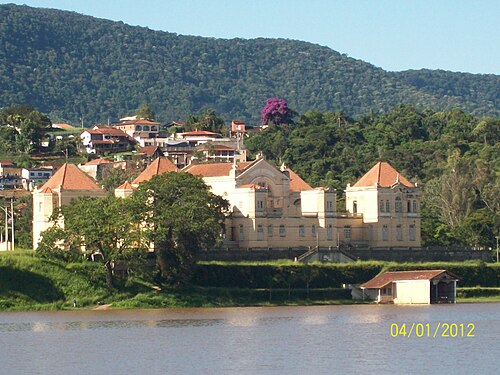
Palácio do Cassino do Lago
Palace · Lago Guanabara
A historic building on the lakeshore.
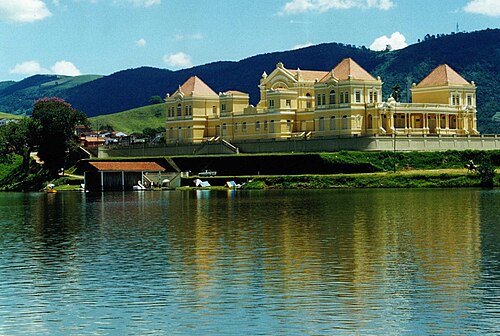
Farol do Lago
Viewpoint · Lago Guanabara
A landmark of the Lago Guanabara.
Parque Wenceslau Braz
Square · Town center
An urban park in the planned town.
Duchas e Cascata
Nature · Parque das Águas
A water area within the springs circuit.
Parque Estadual Nova Baden
Nature
An environmental reserve with a museum.
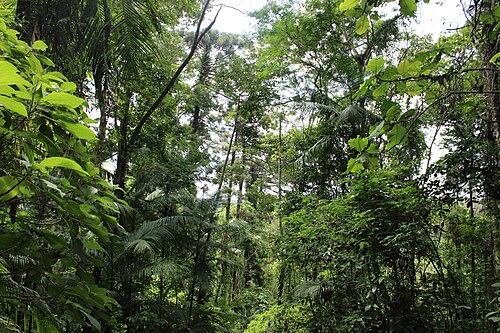
Mata Municipal
Nature
An area of preserved forest.
Rampa de asa delta da Serra das Águas
Viewpoint · Serra das Águas
A free-flight launch site in the hills, at 1,520 m.
Capela de Nossa Senhora da Saúde
Church · Town center
The first building in the settlement.
Heritage
- Capela de Nossa Senhora da Saúde · The first building in the settlement
- Palácio do Cassino do Lago · A historic building on the lakeshore
- Parque das Águas · The spa town's ensemble of mineral springs
Nature
- Serra das Águas · Highest point cited, at 1,520 m
- Waterfalls · Roncador, Sete Quedas, Mudinho and João Gonçalves
- Parque Estadual Nova Baden · An environmental reserve with a museum
Rivers and waters
- River basin: Rio Sapucaí
- Rivers: Rio Lambari (Itaici), Ribeirão Mumbuca, Ribeirão São Bartolomeu, Ribeirão Vermelho
Climate
- Winter: Has recorded −4.6 °C (07/14/1994)
- Summer: Record high of 38.2 °C (10/08/2005)
Typical food
- Catupiry · A creamy cheese created in Lambari in 1911 by Mário Silvestrini
- Sparkling mineral water · Naturally sparkling springs, among the largest of their kind in the world according to Wikipedia
Festivals and events
- Folias and companhias de reis (Epiphany groups) (dez) · Lambari has six reis groups registered by IEPHA in the Folias de Minas. Three of them make their rounds from December 25 to January 6.
Fun facts
- The town's slogan is 'Aqui há saúde' ('Here there is health').
- It is home to the largest known Bougainvillea, 18 m tall, on the shore of the Lago Guanabara.
- It was once voted the 3rd-best mineral water in the world, according to Wikipedia.
- The name comes from the lambari, a small fish common in the region's rivers.
- Jesuânia belonged to Lambari until 1948.
Getting there
- Belo Horizonte · 272 km in a straight line; road distance not confirmed
Notable people from Lambari
- Américo Werneck · Planned the town and was mayor of Belo Horizonte
- Mário Silvestrini · Italian immigrant who created Catupiry cheese in 1911, in Lambari
- Thomaz Crockane · English physician who promoted the use of the waters
- Antônio de Araújo Dantas · Farmer who discovered the mineral waters
- Manuel da Silveira Rodrigues · Began studies on the properties of the waters in 1826
People born in Lambari
- Alaíde Lisboa · Brazilian educator, journalist, writer and politician · 1904–2006
- Candinho · Lawyer, musician · 1934–2017
- Edmar Bacha · Professor, economista · b. 1942
- Henriqueta Lisboa · Writer, poet · 1901–1985
- Lucimar Brandão Guimarães · Person killed or disappeared during the Brazilian dictatorship · 1949–1970
- Marcos Vinicius Dos Santos Rosa · Futebolista brasileiro · b. 1988
- Neilor · Futebolista brasileiro · b. 1986
City hall
- Mayor: Leonardo Framil (Leonardo Framil Lobo) (União), term 2025–2028
- Address: Rua Tiradentes, 165, Centro, Lambari, MG, CEP 37480-000
- Phone: (35) 3271-4011
- Website: lambari.mg.gov.br
Frequently asked questions
Where is Lambari?
Lambari is a municipality in the state of Minas Gerais, Brazil, in the Southern Minas region, 272 km em linha reta from Belo Horizonte.
What is there to do in Lambari?
The attractions of Lambari include Parque das Águas, Lago Guanabara, Palácio do Cassino do Lago, Farol do Lago, Parque Wenceslau Braz, Duchas e Cascata.
What is the population of Lambari?
Lambari has about 20 thousand inhabitants in an area of 213 km².
What is the typical food of Lambari?
Catupiry (A creamy cheese created in Lambari in 1911 by Mário Silvestrini); Água mineral gasosa (Naturally sparkling springs, among the largest of their kind in the world according to Wikipedia).
How do you get to Lambari?
Belo Horizonte: 272 km in a straight line; road distance not confirmed.
Who was born in Lambari?
Notable people from Lambari include Américo Werneck, Mário Silvestrini, Thomaz Crockane, Antônio de Araújo Dantas, Manuel da Silveira Rodrigues, Alaíde Lisboa (brazilian educator, journalist, writer and politician), Candinho (lawyer, musician), Edmar Bacha (professor, economist).
Which tourism region is Lambari part of?
Lambari is part of IGR Águas, one of the 47 official tourism regions of Minas Gerais, with 15 municipalities.
What are the festivals of Lambari?
Folias and companhias de reis (Epiphany groups) (dez).
What are people from Lambari called?
People born in Lambari are called lambariense.
Towns near Lambari
- Jesuânia · 7 km in a straight line
- Cambuquira · 14 km in a straight line
- Olímpio Noronha · 14 km in a straight line
- Campanha · 15 km in a straight line
- Heliodora · 23 km in a straight line
- Natércia · 24 km in a straight line
- Conceição das Pedras · 24 km in a straight line
- São Gonçalo do Sapucaí · 26 km in a straight line