São Roque de Minas, Minas Gerais
Capital of the Serra da Canastra · Central-West Minas
São Roque de Minas is the main gateway to the Parque Nacional da Serra da Canastra, home to the historic source of the Rio São Francisco. The town is about 7 km from the park's main entrance. In the mountains are the Casca d'Anta, with a drop of more than 180 meters, and dozens of other waterfalls. The town is the birthplace of queijo Canastra, a cheese made for more than two centuries and recognized by IPHAN and UNESCO. The producers' association, Aprocan, is headquartered in the municipality.
São Roque de Minas at a glance
- Population: 7,1 thousand
- Area: 2.098,9 km²
- Elevation: 818 m
- Distance from Belo Horizonte: 320 km
- Demonym: são-roquense
- Founded: 1938
- Region: Center-West
- Tourism region: IGR Nascentes das Gerais e Canastra
- Area code: 37
- IBGE code: 3164308
São Roque de Minas is part of the tourism region IGR Nascentes das Gerais e Canastra.
History
The region was inhabited by the Cataguá people, who were wiped out by the bandeirante (colonial explorer) Lourenço Castanho around 1675. In the 18th century, enslaved people who had escaped formed quilombos (runaway slave communities) in the mountains, which held out for many years until they were destroyed by armed expeditions.
After that the area was settled by people of mixed race and by white settlers from the mining zones. The village grew around a chapel dedicated to São Roque. The first Portuguese settlers brought the cheesemaking method that gave rise to the Canastra.
The municipality was created on December 17, 1938, split off from Piumhi, under the name Guia Lopes, in honor of José Francisco Lopes, a hero of the Retirada da Laguna. After a plebiscite, it was renamed São Roque de Minas on December 30, 1962.
In 1972 the Parque Nacional da Serra da Canastra was created to protect the sources of the São Francisco. Most of the municipality's territory lies inside the park or around it, and nature tourism and cheese became the town's trademarks.
Timeline
- 1675 · Lourenço Castanho wipes out the Cataguá people of the region
- 18th c. · Quilombos form in the Serra da Canastra
- 1938 · Creation of the municipality of Guia Lopes, split off from Piumhi
- 1962 · A plebiscite changes the name to São Roque de Minas
- 1972 · Creation of the Parque Nacional da Serra da Canastra, on April 3
- 2008 · The artisanal way of making Minas cheese, including Canastra, is registered by IPHAN
- 2024 · The way of making artisanal Minas cheese is added to the UNESCO list
Things to do in São Roque de Minas: attractions
Historic source of the São Francisco River
Nature · Parque Nacional da Serra da Canastra, Portaria 1
A spring on the Canastra plateau where the Velho Chico (the São Francisco's nickname) begins, near the park's entrance 1.
Cachoeira Casca d'Anta
Waterfall · National Park; lower section via the district of São José do Barreiro
The first great waterfall on the São Francisco, more than 180 meters high. It can be seen from the upper or the lower section.
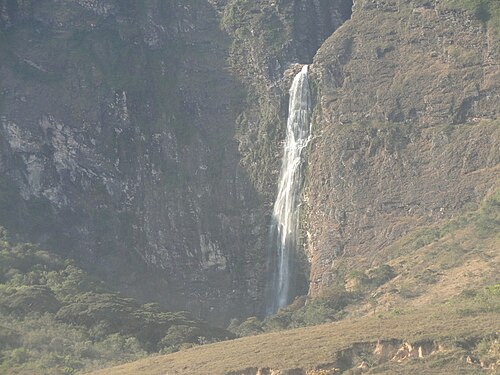
Curral de Pedras
Historic · Parque Nacional da Serra da Canastra
A cattle corral built stone by stone before the park was created.
Cachoeira dos Rolinhos
Waterfall · Parque Nacional da Serra da Canastra
A waterfall in the upper section of the park, on the entrance 1 route.
Cachoeira do Fundão
Waterfall · Arredores de São Roque de Minas
Also called Gameleira, it has a 90-meter drop and a pool for swimming.
Cachoeira do Cerradão
Waterfall · Arredores de São Roque de Minas
Reached by an easy 15-minute walk to the first of three falls.
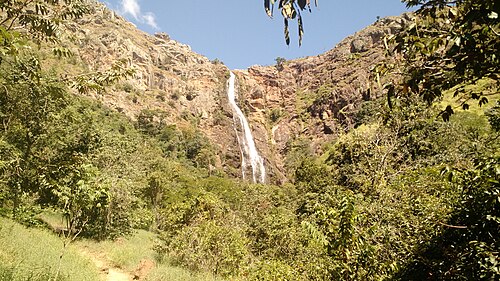
Cachoeira da Parida
Waterfall · Serra da Canastra
Rarely visited, with an archaeological site of rock paintings nearby.
Capão Forro e Cachoeira do Nego
Adventure · Serra da Canastra
Popular spots for rappelling and canyoning.
Vale do Córrego da Lavra
Nature · Serra da Canastra
A valley with crystal-clear waters and the Lavra and Lavrinha waterfalls.
São José do Barreiro
District · District of São José do Barreiro
A district with trails and natural pools of the Rio São Francisco, near the lower section of the Casca d'Anta.
Cheese Route
Food · Zona rural de São Roque de Minas
Visits to farms that produce artisanal queijo Canastra.
Heritage
- Traditional way of making Canastra cheese · Registered by IPHAN in 2008 and recognized by UNESCO in 2024.
- Parque Nacional da Serra da Canastra · A federal protected area created in 1972 to protect the sources of the São Francisco.
Nature
- Parque Nacional da Serra da Canastra · Created in 1972, it has 71,525 demarcated hectares and elevations between 900 and 1,496 meters.
- Chapadão da Canastra · A chest-shaped plateau, or canastra, that gave the mountain range its name.
- Fauna do Cerrado · Maned wolf, giant anteater, pampas deer, giant armadillo and the rare Brazilian merganser.
- High-altitude grasslands · Grassland and cerrado (Brazilian savanna) vegetation on top of the mountains.
Rivers and waters
- River basin: São Francisco River Basin
- Rivers: Rio São Francisco, Córrego da Lavra, Rio do Peixe
- Springs: The historic source of the São Francisco river is in Serra da Canastra National Park, near the town seat.
Climate
- Type: Tropical highland (Cwa)
- Winter: Cold and dry, with July as the coldest month.
- Summer: Warm and humid, with January as the hottest month.
- Best time to visit: April, May, September and October, with little rain and pleasant heat for the waterfalls.
Typical food
- Canastra Cheese · A raw-milk cheese made for more than two centuries, rooted in Portuguese tradition.
- Quitandas (baked treats) · Traditional baked goods prepared by the town's quitandeiras (home bakers).
- Arroz de senzala (rice dish) · A dish featured at the town's food festivals.
Festivals and events
- Town anniversary (Dec) · A celebration on December 17 at Praça da Matriz, with shows and cheese exhibitors.
Fun facts
- The municipality was called Guia Lopes until 1962.
- The legend of the Zagaia tells that cattle drivers were killed at night by a trap hidden in the ceiling of a farmhouse on the plateau.
- The name Canastra comes from the shape of the mountain, which resembles a chest (canastra).
- The geographic source of the São Francisco was identified in 2002 on the Rio Samburá, in Medeiros, but the historic source is in the Canastra.
Getting there
- Belo Horizonte · About 320 km via MG-050 to Piumhi and then via MG-341
- Piumhi · Via the paved MG-341
- São Paulo · About 522 km
- Sacramento · 72 km of dirt road across the top of the mountains
Districts
- São José do Barreiro
- Serra da Canastra
Notable people from São Roque de Minas
- José Francisco Lopes · Known as Guia Lopes, hero of the Retirada da Laguna, who gave the municipality its first name
- Lourenço Castanho Taques · Bandeirante who occupied the region in the 17th century
- Belchior dos Reis Faria · Teacher and current mayor, formerly mayor of Vargem Bonita
People born in São Roque de Minas
- Ademir Silvestre da Costa · Político do Brasil · b. 1952
- Antonio Ferreira Barbosa · Político do Brasil · b. 1959
City hall
- Mayor: Belchior dos Reis Faria (Brexinha) (União Brasil), term 2025–2028
- Address: Praça Albenides da Costa Faria, 10, São Roque de Minas (MG), CEP 37928-000
- Phone: (37) 2150-0052
- Opening hours: Monday to Friday, 8:00 to 17:00
- Website: saoroquedeminas.mg.gov.br
Frequently asked questions
Where is São Roque de Minas?
São Roque de Minas is a municipality in the state of Minas Gerais, Brazil, in the Center-West region, 320 km from Belo Horizonte.
What is there to do in São Roque de Minas?
The attractions of São Roque de Minas include Nascente histórica do Rio São Francisco, Cachoeira Casca d'Anta, Curral de Pedras, Cachoeira dos Rolinhos, Cachoeira do Fundão, Cachoeira do Cerradão.
What is the population of São Roque de Minas?
São Roque de Minas has about 7,1 thousand inhabitants in an area of 2.098,9 km².
What is the typical food of São Roque de Minas?
Queijo Canastra (A raw-milk cheese made for more than two centuries, rooted in Portuguese tradition); Quitandas (Traditional baked goods prepared by the town's quitandeiras (home bakers)); Arroz de senzala (A dish featured at the town's food festivals).
When is the best time to visit São Roque de Minas?
April, May, September and October, with little rain and pleasant heat for the waterfalls.. The climate is tropical highland (cwa).
How do you get to São Roque de Minas?
Belo Horizonte: About 320 km via MG-050 to Piumhi and then via MG-341. Piumhi: Via the paved MG-341. São Paulo: About 522 km. Sacramento: 72 km of dirt road across the top of the mountains.
Who was born in São Roque de Minas?
Notable people from São Roque de Minas include José Francisco Lopes, Lourenço Castanho Taques, Belchior dos Reis Faria, Ademir Silvestre da Costa (politician of brazil), Antonio Ferreira Barbosa (politician of brazil).
Which tourism region is São Roque de Minas part of?
São Roque de Minas is part of IGR Nascentes das Gerais e Canastra, one of the 47 official tourism regions of Minas Gerais, with 20 municipalities.
What are the festivals of São Roque de Minas?
Aniversário da cidade (Dec).
What are people from São Roque de Minas called?
People born in São Roque de Minas are called são-roquense.
Towns near São Roque de Minas
- Vargem Bonita · 9 km in a straight line
- Medeiros · 33 km in a straight line
- São João Batista do Glória · 45 km in a straight line
- Bambuí · 48 km in a straight line
- Doresópolis · 48 km in a straight line
- Piumhi · 49 km in a straight line
- Delfinópolis · 51 km in a straight line
- Capitólio · 52 km in a straight line