Congonhas, Minas Gerais
Aleijadinho's Prophets · World Heritage Site
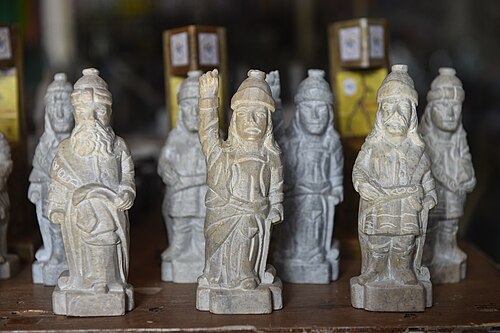
Congonhas holds one of the most important ensembles of Baroque art in the world. At the top of the Morro do Maranhão stands the Santuário do Bom Jesus de Matosinhos, with the twelve soapstone prophets and the Passos da Paixão carved by Aleijadinho. The sanctuary has been a UNESCO World Heritage Site since 1985. Every September the city hosts the Jubileu (a religious pilgrimage festival), one of the oldest pilgrimages in Minas. Today the economy revolves around iron ore mining.
Congonhas at a glance
- Population: 53 thousand
- Area: 304 km²
- Elevation: 871 m
- Distance from Belo Horizonte: 81 km
- Demonym: congonhense
- Founded: 1938
- Region: Greater BH and Central
- Tourism region: IGR Ouro
- Area code: 31
- IBGE code: 3118007
Congonhas is part of the tourism region IGR Ouro.
History
The name comes from congonha, a local shrub used in teas. Bandeirantes (colonial explorers) passed through the area in the late 17th century, and the settlement grew with gold, tied to Vila Rica. In 1734, construction began on the Matriz de Nossa Senhora da Conceição.
In 1757, the Portuguese miner Feliciano Mendes, cured of an illness, raised a cross and an oratory to Bom Jesus de Matosinhos. From there the sanctuary was born, built over the course of decades. Between 1796 and 1805, Aleijadinho and his workshop carved the Passos da Paixão and the twelve prophets in the churchyard.
In 1812, Baron von Eschwege set up the Fábrica Patriótica in the region, one of the first attempts to produce iron on an industrial scale in Brazil. The district belonged to Ouro Preto and later to Queluz, now Conselheiro Lafaiete.
Congonhas do Campo became a municipality on December 17, 1938, and was renamed simply Congonhas in 1948. The Sanctuary was listed in 1939 and recognized by UNESCO in 1985. In 2015, the Museu de Congonhas opened next to the ensemble.
Timeline
- 1734 · Construction of the Matriz de Nossa Senhora da Conceição begins
- 1757 · Feliciano Mendes raises a cross to Bom Jesus de Matosinhos
- 1800 · Aleijadinho works on the prophets in the churchyard
- 1812 · Eschwege sets up the Fábrica Patriótica iron works
- 1938 · Creation of the municipality of Congonhas do Campo
- 1939 · The Sanctuary is listed by IPHAN
- 1948 · The municipality is renamed Congonhas
- 1985 · The Sanctuary is inscribed on the UNESCO World Heritage List
- 2015 · Opening of the Museu de Congonhas
Things to do in Congonhas: attractions
Santuário do Bom Jesus de Matosinhos
Church · Morro do Maranhão, Centro
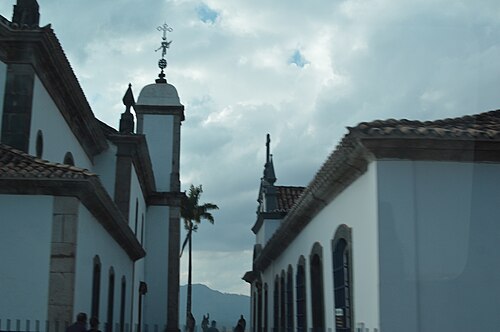
A basilica with the twelve soapstone prophets in its churchyard. A UNESCO World Heritage Site, with free admission.
Passos da Paixão
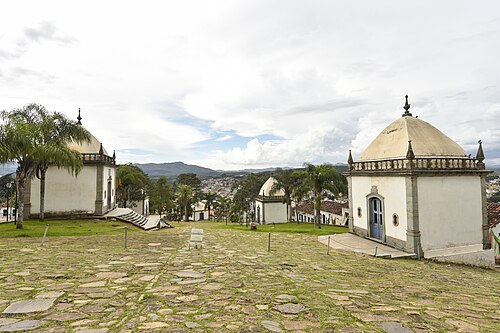
Chapels · Jardim dos Passos, Morro do Maranhão
Six chapels in the sanctuary garden with 66 cedar figures carved by Aleijadinho and his workshop.
Museu de Congonhas
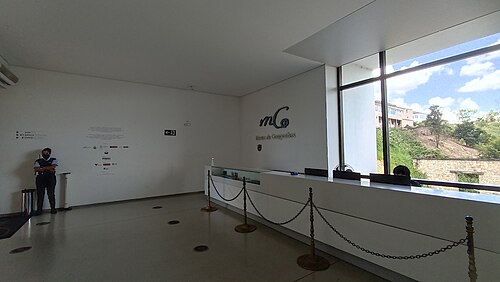
Museum · Next to the Sanctuary
A museum dedicated to Aleijadinho and the history of the site, designed by Gustavo Penna.
Romaria
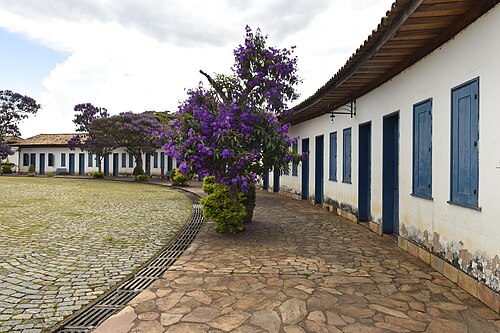
Cultural center · Perto da Praça do Santuário
A former circular lodging for pilgrims, now a cultural center with a museum of mineralogy and sacred art.
Beco dos Canudos
Historic street · Entre a Basílica e o Jardim dos Passos
Small colonial houses with soapstone handicraft shops.
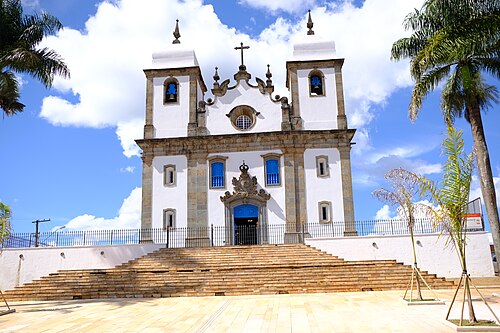
Matriz de Nossa Senhora da Conceição
Church · Town center
A church begun in 1734, with a soapstone portal attributed to Aleijadinho.
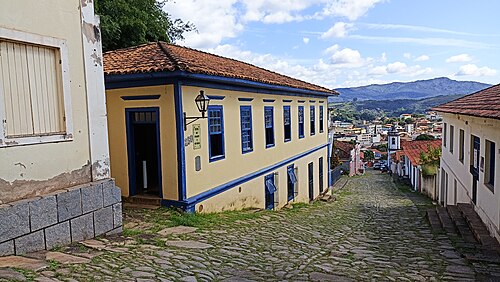
Igreja de Nossa Senhora do Rosário
Church · Town center
One of the oldest churches in the city, listed by the municipality.
Museu da Imagem e Memória
Museum · Rua Bom Jesus, Ladeira Histórica
Photos, documents, and objects from local history in the old Casarão dos Fonseca.
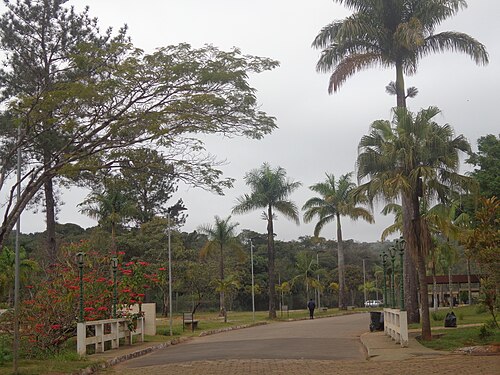
Parque Ecológico da Cachoeira
Nature · Cerca de 6 km do centro
A park with natural pools, trails, and a leisure area beside the Cachoeira de Santo Antônio.
Heritage
- Santuário do Bom Jesus de Matosinhos · UNESCO World Heritage Site since 1985
- Matriz de Nossa Senhora da Conceição · Listed at the national level
- Sala dos Milagres · The Sanctuary's collection of ex-votos, listed at the national level
- Railway Station · A 1914 building, listed at the national level
- Igreja de Nossa Senhora da Ajuda · Church in Alto Maranhão, listed by IEPHA
Nature
- Parque Ecológico da Cachoeira · A leisure area at the foot of the mountains, beside the Cachoeira de Santo Antônio
Rivers and waters
- River basin: Rio São Francisco (Rio Paraopeba sub-basin)
- Rivers: Rio Maranhão, Rio Soledade, Rio Ouro Branco, Rio Gagé, Ribeirão Varginha
Climate
- Type: Highland tropical
- Winter: Dry and cool
- Summer: Hot and rainy
- Best time to visit: April to October, in the dry season; September for the Jubileu
Typical food
- Congonha tea · A drink made from the shrub that gives the city its name, used since Indigenous times
- Quitandas (baked treats) · Homemade cookies and cakes celebrated at the Festival da Quitanda
Festivals and events
- Festival da Quitanda (mai) · Concerts and a contest of quitandeiras (home bakers)
- Jubileu do Senhor Bom Jesus de Matosinhos (set) · Pilgrimage from September 7 to 14, one of the oldest in Minas
- Winter Festival · Held every year, with concerts, theater, dance and exhibitions.
- Feast of Nossa Senhora do Rosário · Brings together the town's Congado groups and guards from neighboring towns.
Fun facts
- The city's name comes from the congonha shrub, which Indigenous peoples called kongoi, meaning "that which nourishes."
- Congonhas Airport, in São Paulo, owes its name to the title of the Viscount Lucas Monteiro de Barros.
- Some theories suggest that the prophets' faces portray members of the Inconfidência Mineira.
- The Museu de Congonhas is said to be the first museum in Brazil located within a World Heritage Site.
- The landscaping around the Sanctuary was designed by Burle Marx.
Getting there
- Belo Horizonte · 81 km via BR-040
- Ouro Preto · About 54 km
Districts
Notable people from Congonhas
- Aleijadinho · Sculptor who made the prophets and the Passos (Stations) of the Sanctuary
- Feliciano Mendes · Portuguese miner who began the Sanctuary in 1757
- Cônego Luís Vieira da Silva · Thinker of the Inconfidência Mineira, born in Lobo Leite
- Dom Silvério Gomes Pimenta · Archbishop of Mariana and member of the Academia Brasileira de Letras, born in the town
- Lucas Monteiro de Barros · Viscount of Congonhas do Campo, born in the town
People born in Congonhas
- Amaury Lorenzo · Ator brasileiro · b. 1984
- Ana Pimentel · Política brasileira · b. 1982
- Anivaldo Antônio dos Santos
- Antonio Américo D’Urzedo
- Breno Matosinhos · Futebolista brasileiro · b. 1991 · nascido(a) em Santuário do Bom Jesus de Matosinhos
- Dr. Albertinho · Brazilian politician
- Flávio Cunha
- Francisco de Paula Ferreira · Brazilian musician · 1777–1833
- José Pedro de Freitas · Brazilian medium · 1921–1971
- José Ribeiro Pereira · Brazilian lawyer
- Lucas Antônio Monteiro de Barros · Judge, politician · 1767–1851
- Lucas Antônio Monteiro de Castro · 1808–1878
- Manuel José Monteiro de Castro · Brazilian politician
- Marcos Vinicius · Compositor brasileiro · b. 1961
- Rodolfo das Mercês de Oliveira Pena · Catholic bishop, Catholic priest · 1890–1975
- Romualdo José Monteiro de Barros · Brazilian politician
- Said Paulo Arges · Brazilian player · 1905–1994
- Silvério Gomes Pimenta · Archbishop of Mariana and Brazil's first Black archbishop · 1840–1922
- Vicente Coelho de Seabra Silva Teles · Brazilian-born scientist
City hall
- Mayor: Anderson Cabido (Anderson Costa Cabido) (PSB), term 2025–2028
- Address: Praça Presidente Juscelino Kubitschek, 135, Centro, Congonhas, MG, CEP 36410-064
- Phone: (31) 3732-0800
- Opening hours: Monday to Friday, 12:00 to 18:00
- Website: www.congonhas.mg.gov.br
Frequently asked questions
Where is Congonhas?
Congonhas is a municipality in the state of Minas Gerais, Brazil, in the Greater BH and Central region, 81 km from Belo Horizonte.
What is there to do in Congonhas?
The attractions of Congonhas include Santuário do Bom Jesus de Matosinhos, Passos da Paixão, Museu de Congonhas, Romaria, Beco dos Canudos, Matriz de Nossa Senhora da Conceição.
What is the population of Congonhas?
Congonhas has about 53 thousand inhabitants in an area of 304 km².
What is the typical food of Congonhas?
Chá de congonha (A drink made from the shrub that gives the city its name, used since Indigenous times); Quitandas (Homemade cookies and cakes celebrated at the Festival da Quitanda).
When is the best time to visit Congonhas?
April to October, in the dry season; September for the Jubileu. The climate is highland tropical.
How do you get to Congonhas?
Belo Horizonte: 81 km via BR-040. Ouro Preto: About 54 km.
Who was born in Congonhas?
Notable people from Congonhas include Aleijadinho, Feliciano Mendes, Cônego Luís Vieira da Silva, Dom Silvério Gomes Pimenta, Lucas Monteiro de Barros, Amaury Lorenzo (brazilian actor), Ana Pimentel (brazilian politician), Anivaldo Antônio dos Santos.
Which tourism region is Congonhas part of?
Congonhas is part of IGR Ouro, one of the 47 official tourism regions of Minas Gerais, with 18 municipalities.
What are the festivals of Congonhas?
Festival da Quitanda (mai), Jubileu do Senhor Bom Jesus de Matosinhos (set), Festival de Inverno, Festa de Nossa Senhora do Rosário.
What are people from Congonhas called?
People born in Congonhas are called congonhense.
Towns near Congonhas
- Jeceaba · 15 km in a straight line
- Ouro Branco · 16 km in a straight line
- São Brás do Suaçuí · 18 km in a straight line
- Conselheiro Lafaiete · 20 km in a straight line
- Belo Vale · 21 km in a straight line
- Moeda · 27 km in a straight line
- Queluzito · 28 km in a straight line
- Itabirito · 28 km in a straight line