Ouro Branco, Minas Gerais
At the foot of the Serra do Ouro Branco · Royal Road
Ouro Branco lies at the foot of the mountain range of the same name, the southern landmark of the Espinhaço Range, on the route of the Estrada Real. It was born at the end of the 17th century, when bandeirantes found pale-colored gold in the region. The Matriz de Santo Antônio, begun in 1717, is one of the oldest churches in Minas Gerais. Since 1976 the city has been home to a large steel mill, now owned by Gerdau. The Parque Estadual da Serra do Ouro Branco, Lago Soledade and the village of Itatiaia draw visitors looking for nature and Minas Gerais food.
Ouro Branco at a glance
- Population: 39 thousand
- Area: 259 km²
- Elevation: 1.033 m
- Distance from Belo Horizonte: 100 km
- Demonym: ouro-branquense
- Founded: 1953
- Region: Greater BH and Central
- Tourism region: IGR Ouro
- Area code: 31
- IBGE code: 3145901
Ouro Branco is part of the tourism region IGR Ouro.
History
The region was inhabited by the Carijó Indigenous people. At the end of the 17th century, probably in 1694, former members of Borba Gato's expedition (bandeira) arrived in search of gold. Manuel Garcia went on to Tripuí, where Ouro Preto was born, and Miguel Garcia founded the settlement of Ouro Branco ("White Gold"), a name linked to the pale color of the gold found there.
In 1717 construction began on the Matriz de Santo Antônio, probably completed in 1779. On February 16, 1724, the village became a parish, under Vila Rica. Gold extraction lost strength back in the 18th century, and the place went through grape and potato cycles.
The Serra do Ouro Branco appeared on old maps as Serra do Deus-Te-Livre and served as a landmark for travelers on the Estrada Real. A district of Ouro Preto for more than two centuries, Ouro Branco was elevated to municipality by state law 1,039 of December 12, 1953, and installed on January 1, 1954.
In 1976 the arrival of Aço Minas Gerais, now Gerdau Açominas, opened the industrial cycle and made the city grow. Today Ouro Branco has campuses of UFSJ and IFMG and protects its mountain range as a state park.
Timeline
- 1694 · Probable arrival of the bandeirantes and start of the settlement
- 1717 · Construction of the Matriz de Santo Antônio begins
- 1724 · The village becomes a parish
- 1779 · Probable completion of the Matriz
- 1953 · Creation of the municipality, split off from Ouro Preto
- 1954 · Installation of the municipality
- 1976 · Aço Minas Gerais, now Gerdau Açominas, is established
- 1978 · The Serra do Ouro Branco is listed as heritage by IEPHA
- 2009 · Heritage listing of the Capela de Santana and Fazenda Pé do Morro complex
Things to do in Ouro Branco: attractions
Igreja Matriz de Santo Antônio
Church · Town center
Baroque church begun in 1717, one of the oldest in Minas Gerais, with works attributed to Aleijadinho.
Parque Estadual da Serra do Ouro Branco
Nature · Serra do Ouro Branco
Park created in 2009, with trails, waterfalls, springs and ruins from the gold cycle. Free admission.
Capela de Santana e Fazenda Pé do Morro
Historic complex · About 4 km from the urban area
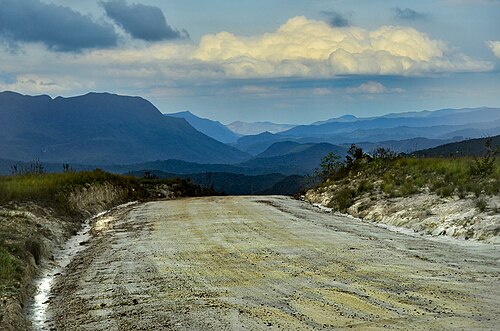
18th-century complex at the foot of the mountains, along the Estrada Real. The chapel is open to visitors.
Casa de Tiradentes
Historic house · Carreiras, na Estrada Real
Main house of the Fazenda Carreiras, a former mule drivers' stopover. The name is popular, and there is no proof that Tiradentes ever stopped there.
Capela de Nossa Senhora Mãe dos Homens
Church
Small chapel at the top of a stairway, with a view of the city.
Lago Soledade
Lake
Fed by springs from the mountains, it has a viewpoint and an area for walking and picnics.
Itatiaia
Village · Serra do Ouro Branco
Mountain village with the 18th-century Igreja de Santo Antônio, Minas Gerais food restaurants and sunsets.
Cachoeira de Itatiaia
Waterfall · Itatiaia
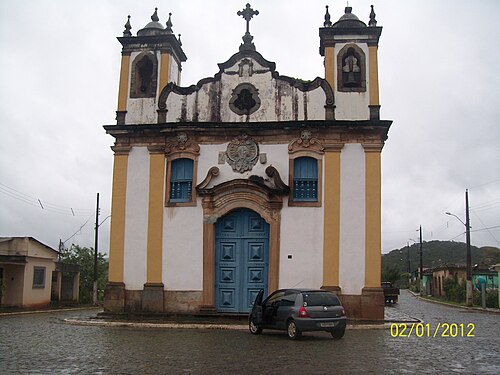
Waterfall with a swimming hole, near the village of Itatiaia.
Rua Santo Antônio
Historic street · Historic center
Laid out along the Estrada Real, it features colonial mansions of wattle-and-daub and stone.
Poção do Córrego do Veríssimo
Nature · Serra do Ouro Branco
Natural pool on the Circuito das Aves trail.
Heritage
- Serra do Ouro Branco · Listed by IEPHA in 1978, the southern landmark of the Espinhaço Range
- Capela de Santana e casa-sede da Fazenda Pé do Morro · 18th-century complex listed by IEPHA in 2009
Nature
- Serra do Ouro Branco · Plateau between 1,250 and 1,568 m, the southern start of the Espinhaço Range
- Parque Estadual da Serra do Ouro Branco · Protected area created in 2009 in Ouro Branco and Ouro Preto
- Lago Soledade · Lake formed by springs from the mountains
Rivers and waters
- River basin: Divide between the São Francisco River basin (Paraopeba River) and the Doce River basin
- Rivers: Ribeirão da Cachoeira, Ribeirão Água Limpa, Córrego do Veríssimo
- Springs: The springs of the Serra do Ouro Branco form Lago Soledade and supply all the water consumed in town.
Climate
- Winter: Cold and dry
- Summer: Hot and rainy
- Best time to visit: April to September; October for the Festival da Batata
Typical food
- Potato · Hallmark of one of the city's economic cycles and theme of its biggest festival
- Chicken with okra · Chicken with okra, served at restaurants downtown
- Feijão tropeiro (drover's beans) · Minas Gerais classic of the local cuisine
- Doce de leite with cheese · Typical regional dessert (milk caramel with cheese)
Festivals and events
- Festival Tira-Gosto de Itatiaia (Jul) · Minas Gerais bar snacks in the village of Itatiaia
- Festival da Batata (Oct) · Potato festival that began in the 1980s as a farmers' dance and reached its 39th edition in 2025
- Festival de Inverno de Ouro Branco · Cultural event of the cold season
Fun facts
- The name refers to the region's pale gold, in contrast with the dark gold of Ouro Preto ("Black Gold").
- On 18th- and 19th-century maps, the range appeared as Serra do Deus-Te-Livre.
- The Serra do Ouro Branco is the southern starting point of the Espinhaço Range, which runs about 1,100 km to Bahia.
- The founders of Ouro Branco and Ouro Preto came from the same expedition (bandeira).
- In its early days, the Festival da Batata crowned a Potato Queen and Potato Princess.
Getting there
- Belo Horizonte · About 100 km via BR-040, in 1h30
- Congonhas · 25 km
- Ouro Preto · 32 km
Notable people from Ouro Branco
- Miguel Garcia · Former member of Borba Gato's bandeira expedition, founder of the village
- Borba Gato · Bandeirante whose expedition brought the first miners
- Aleijadinho · Works attributed to him in the Matriz de Santo Antônio
People born in Ouro Branco
- Marília Campos · Política brasileira · b. 1961
- Matheus Abreu · Brazilian actor
- Natalina Marcia de Oliveira · Política brasileira · b. 1980
- Romeu Romão · Futebolista brasileiro · b. 1990
City hall
- Mayor: Sávio Fontes (Sávio Rodrigues Fontes) (Republicanos), term 2025–2028
- Address: Praça Sagrados Corações, 200, Ouro Branco, MG, CEP 36420-000
- Phone: (31) 3938-1000
- Website: www.ourobranco.mg.gov.br
Frequently asked questions
Where is Ouro Branco?
Ouro Branco is a municipality in the state of Minas Gerais, Brazil, in the Greater BH and Central region, 100 km from Belo Horizonte.
What is there to do in Ouro Branco?
The attractions of Ouro Branco include Igreja Matriz de Santo Antônio, Parque Estadual da Serra do Ouro Branco, Capela de Santana e Fazenda Pé do Morro, Casa de Tiradentes, Capela de Nossa Senhora Mãe dos Homens, Lago Soledade.
What is the population of Ouro Branco?
Ouro Branco has about 39 thousand inhabitants in an area of 259 km².
What is the typical food of Ouro Branco?
Potato (Hallmark of one of the city's economic cycles and theme of its biggest festival); Frango com quiabo (Chicken with okra, served at restaurants downtown); Feijão tropeiro (Minas Gerais classic of the local cuisine); Doce de leite com queijo (Typical regional dessert (milk caramel with cheese)).
When is the best time to visit Ouro Branco?
April to September; October for the Festival da Batata.
How do you get to Ouro Branco?
Belo Horizonte: About 100 km via BR-040, in 1h30. Congonhas: 25 km. Ouro Preto: 32 km.
Who was born in Ouro Branco?
Notable people from Ouro Branco include Miguel Garcia, Borba Gato, Aleijadinho, Marília Campos (brazilian politician), Matheus Abreu (brazilian actor), Natalina Marcia de Oliveira (brazilian politician), Romeu Romão (brazilian footballer).
Which tourism region is Ouro Branco part of?
Ouro Branco is part of IGR Ouro, one of the 47 official tourism regions of Minas Gerais, with 18 municipalities.
What are the festivals of Ouro Branco?
Festival Tira-Gosto de Itatiaia (Jul), Festival da Batata (Oct), Festival de Inverno de Ouro Branco.
What are people from Ouro Branco called?
People born in Ouro Branco are called ouro-branquense.
Towns near Ouro Branco
- Congonhas · 16 km in a straight line
- Conselheiro Lafaiete · 18 km in a straight line
- Itaverava · 19 km in a straight line
- Ouro Preto · 25 km in a straight line
- Catas Altas da Noruega · 28 km in a straight line
- São Brás do Suaçuí · 29 km in a straight line
- Santana dos Montes · 29 km in a straight line
- Jeceaba · 31 km in a straight line