Ouro Preto, Minas Gerais
UNESCO World Heritage Site · Região dos Inconfidentes
Formerly Vila Rica, Ouro Preto was born of the gold rush in the late 17th century and became one of the richest cities in the Americas. It was the capital of Minas for almost two centuries, the birthplace of the Inconfidência Mineira, and it holds the country's largest Baroque ensemble, with works by Aleijadinho and Mestre Ataíde.
Ouro Preto at a glance
- Population: 74 thousand
- Area: 1.245 km²
- Elevation: 1.150 m
- Distance from Belo Horizonte: 100 km
- Demonym: ouro-pretano
- Founded: 1711
- Region: Greater BH and Central
- Tourism region: IGR Ouro
- Area code: 31
- IBGE code: 3146107
Ouro Preto is part of the tourism region IGR Ouro.
History
The urban core was born on June 24, 1698, with the arrival of the expedition (bandeira) of Antônio Dias and Padre Faria at the region's gold mines. On July 8, 1711, the settlements were united and raised to the status of town, under the name Vila Rica.
In 1720, Vila Rica was chosen as the capital of the Captaincy of Minas Gerais. Gold paid for churches, fountains and grand mansions, and the town became a center of Minas Baroque, with works by Aleijadinho and Mestre Ataíde. In the late 18th century, it was the stage of the Inconfidência Mineira.
In 1823, Dom Pedro I granted the town the title of Imperial City, with the name Ouro Preto. The city was the capital of the province and then of the state until 1897, when the seat of government moved to Belo Horizonte.
The urban ensemble was protected by the state in 1933 and declared a national monument in 1938. In 1980, Ouro Preto became the first Brazilian city inscribed by UNESCO as a World Heritage Site.
Timeline
- 1698 · Bandeirantes find dark gold, coated in iron oxide, in the streams of the Serra do Ouro Preto.
- 1711 · The settlements of the region are united and raised to Vila Rica.
- 1720 · Vila Rica becomes the seat of the new Captaincy of Minas Gerais.
- 1789 · The Inconfidência Mineira is uncovered and its leaders are arrested.
- 1823 · Receives the title of Imperial City of Ouro Preto.
- 1876 · The Escola de Minas is founded, the country's first mining engineering school.
- 1897 · The capital is moved to the newly built Belo Horizonte.
- 1938 · The urban ensemble is listed by IPHAN.
- 1980 · Becomes the first Brazilian site on the UNESCO World Heritage List.
Things to do in Ouro Preto: attractions
Praça Tiradentes
Square · Praça Tiradentes, Centro
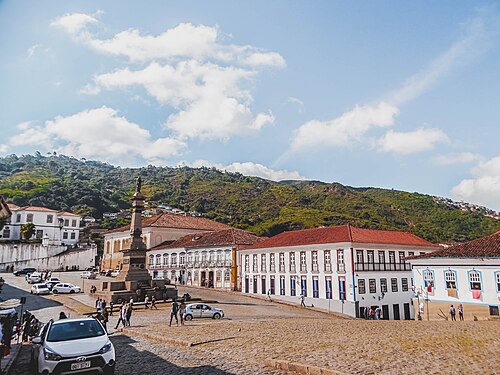
The heart of the historic center, with the monument to Tiradentes. On one side stands the Museu da Inconfidência and on the other the former Palácio dos Governadores.
Museu da Inconfidência
Museum · Praça Tiradentes, Centro
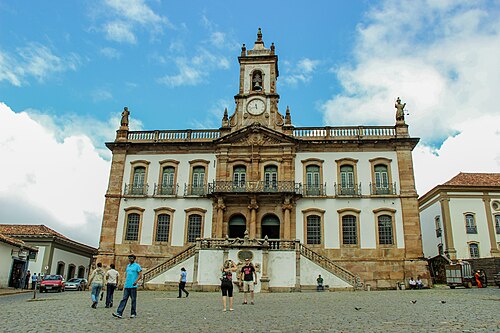
Housed in the former Casa de Câmara e Cadeia (town hall and jail). It holds a collection on the Inconfidência Mineira and the Panteão dos Inconfidentes.
Igreja de São Francisco de Assis
Church · Largo de Coimbra, Centro
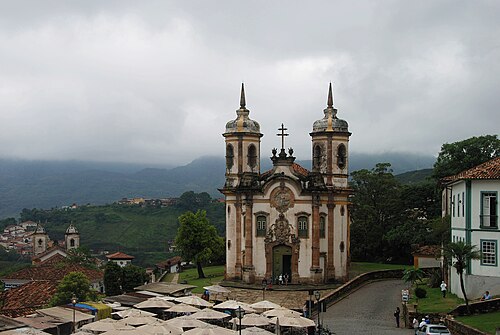
One of the best-known works of Minas Baroque, with design and carvings by Aleijadinho and a ceiling painted by Mestre Ataíde.
Igreja Matriz de Nossa Senhora do Pilar
Church · Bairro do Pilar
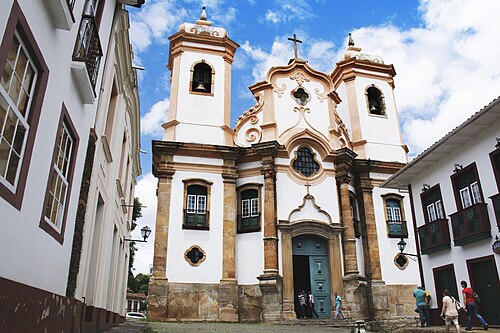
A mother church of great artistic richness, with an interior covered in gilded carvings.
Matriz de Nossa Senhora da Conceição de Antônio Dias
Church · Bairro Antônio Dias
The mother church of the Antônio Dias neighborhood, tied to the history of Aleijadinho.
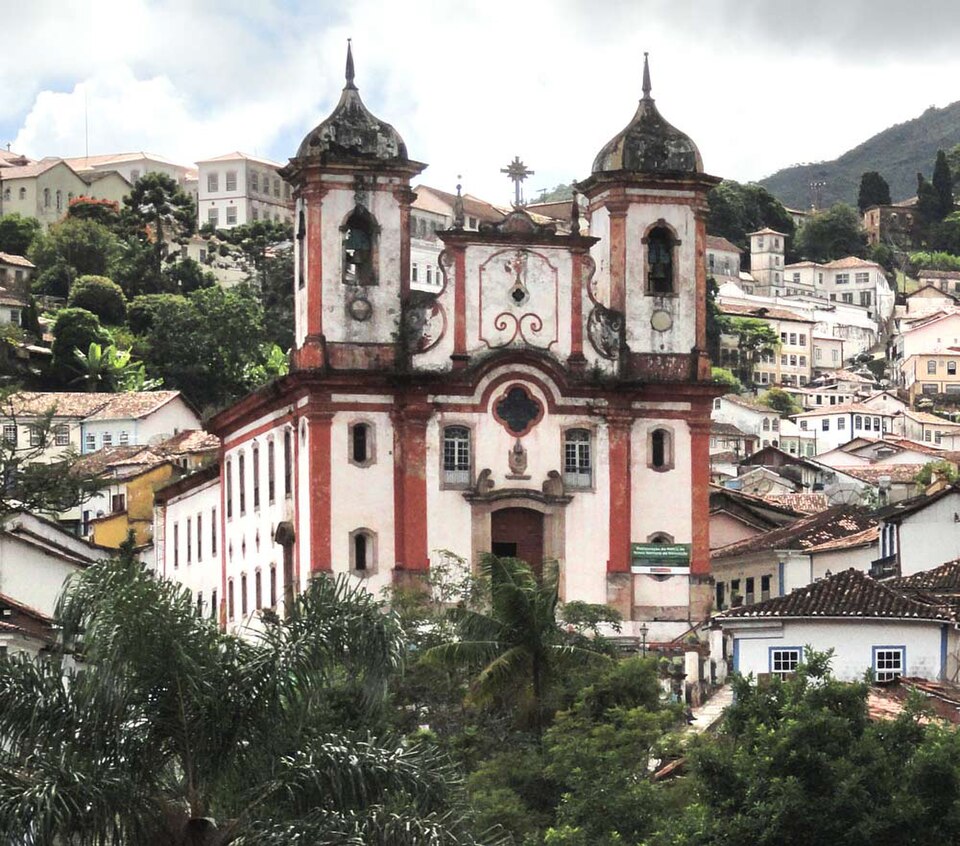
Igreja de Nossa Senhora do Carmo
Church · Historic center
A church in the historic center, next to the former Casa da Ópera.
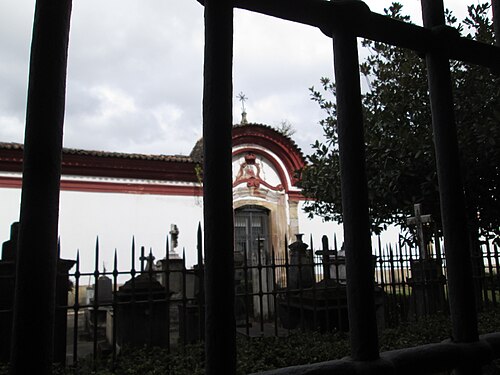
Igreja de Nossa Senhora do Rosário dos Homens Pretos
Church · Bairro do Rosário
Church of the brotherhood of Black men, known for its facade and curved floor plan.
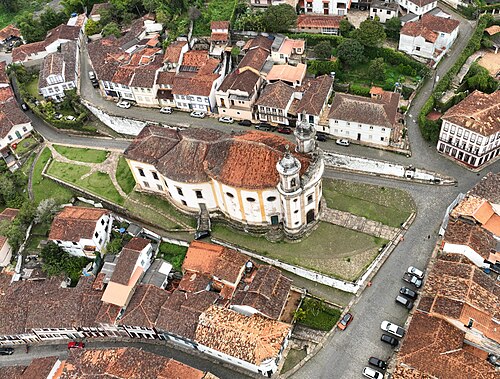
Teatro Municipal (Casa da Ópera)
Theater · Historic center, near the Carmo Church
Opened in the 18th century, it is regarded as the oldest theater still in operation in Latin America.
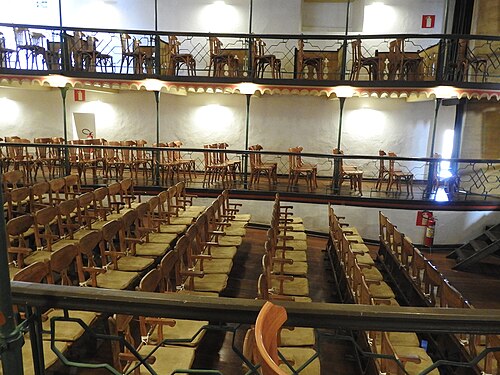
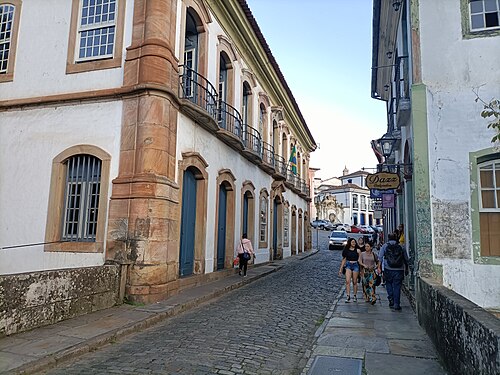
Casa dos Contos
Museum · Historic center
An 18th-century mansion tied to tax collection and to the history of the Inconfidência. Today it houses a museum.
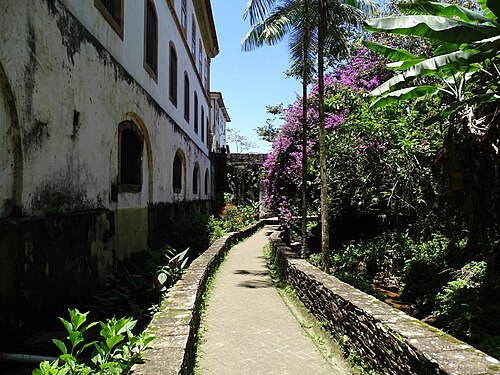
Horto dos Contos
Park · Historic center
A park in the historic center covering 32 hectares, with a trail of about 2.5 km.
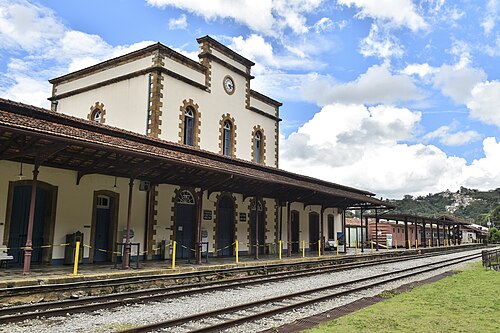
Estação Ferroviária de Ouro Preto
Train · Bairro Barra
Starting point of the tourist train that connects Ouro Preto to Mariana.
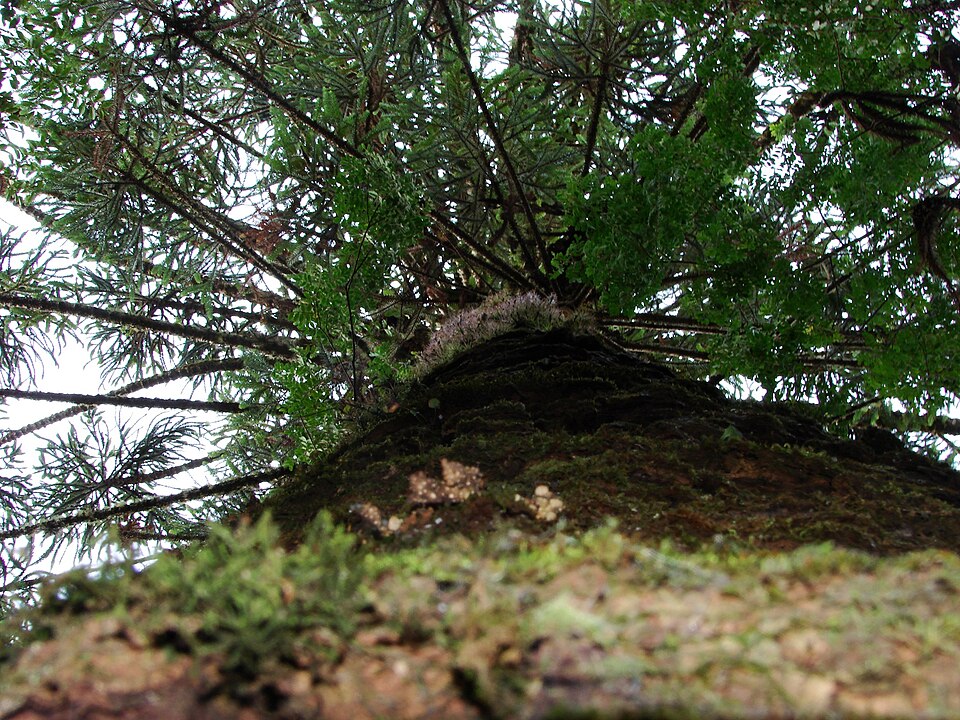
Estação Ecológica do Tripuí
Nature · Ouro Preto
A state conservation area in the municipality, created to protect a small endemic animal, the peripatus.
Heritage
- Igreja de São Francisco de Assis · A masterpiece of Minas Baroque, with design and carvings by Aleijadinho.
- Matriz de Nossa Senhora do Pilar · Interior covered in gilded carvings; houses the Museu de Arte Sacra.
- Museu da Inconfidência · In the former Casa de Câmara e Cadeia, on Praça Tiradentes.
- Casa dos Contos · An 18th-century townhouse tied to the collection of gold taxes.
Nature
- Parque Estadual do Itacolomi · Trails up to the 1,772 m peak and old tea farms.
- Cachoeira das Andorinhas · Source of the Rio das Velhas, 5 km from the center.
- Lavras Novas · A district with viewpoints, waterfalls and nightlife.
Rivers and waters
- River basin: Rio Doce and Rio São Francisco (Rio das Velhas)
- Rivers: Rio das Velhas, Ribeirão do Funil, Ribeirão do Carmo, Rio Maracujá
- Springs: The Rio das Velhas rises at the Cachoeira das Andorinhas, within the municipality.
Climate
- Type: Highland tropical
- Winter: Cold and dry, lows below 5 °C
- Summer: Rainy, highs near 27 °C
- Best time to visit: April to September
Typical food
- Feijão tropeiro (drover's beans) · Beans, manioc flour, pork cracklings and egg.
- Chicken with ora-pro-nóbis · A typical dish made with the native leaf.
- Guava paste from São Bartolomeu · Made in copper pots in the district.
- Pão de queijo and cachaça · Found on every table.
Chefs from Ouro Preto
- Milsane de Paula · Cozinha Sebastião. On Praça Tiradentes.
Flavors of Minas: typical dishes and chefs
Festivals and events
- Holy Week (Mar/Apr) · Processions and sawdust carpets along the streets.
- Winter Festival (Jul) · Music, theater and arts from UFOP.
- CineOP (Jun) · Mostra de Cinema de Ouro Preto (Ouro Preto Film Festival).
- Carnival (Feb) · Street parties (blocos) and student houses.
Fun facts
- The name comes from gold darkened by iron oxide.
- The city has more than 300 repúblicas estudantis (student houses).
- Many churches were built by rival brotherhoods, which competed in splendor.
Getting there
- Belo Horizonte · 100 km via BR-040 and BR-356, about 1h40
- Confins Airport · 140 km
- Mariana · 12 km, also by tourist train
Districts
- Amarantina
- Antônio Pereira
- Cachoeira do Campo
- Engenheiro Correia
- Glaura
- Lavras Novas
- Miguel Burnier
- Rodrigo Silva
- Santa Rita de Ouro Preto
- Santo Antônio do Leite
- Santo Antônio do Salto
- São Bartolomeu
Notable people from Ouro Preto
- Aleijadinho · Antônio Francisco Lisboa, sculptor and architect. He designed the Igreja de São Francisco de Assis.
- Mestre Ataíde · Manuel da Costa Ataíde, painter of the ceiling of São Francisco de Assis.
- Tiradentes · Joaquim José da Silva Xavier, ensign and leader of the Inconfidência Mineira.
- Tomás Antônio Gonzaga · Inconfidência poet, author of Marília de Dirceu.
People born in Ouro Preto
- Afonso Celso de Assis Figueiredo · Brazilian politician and nobleman · 1836–1912
- Afonso Celso de Assis Figueiredo Júnior · Brazilian writer, teacher, historian and politician · 1860–1938
- Alcides Lins · Brazilian politician · 1891–1969
- Alfredo Baeta Neves · Brazilian engineer, teacher and politician
- Alice Gomes · Brazilian trampoline gymnast
- Alice Tibiriçá · Brazilian activist · 1886–1950
- Alphonsus de Guimaraens · Judge, poet, writer · 1870–1921
- Amaro Lanari Júnior · Engineer · 1913–1999
- Antônio Carlos Bicalho Lana · Person killed or disappeared during the Brazilian dictatorship · 1949–1973
- Antônio Teixeira de Sousa Magalhães · Brazilian politician · 1858–1915
- Arthur Versiani Vellôso · Brazilian philosopher
- Beatriz Francisca de Assis Brandão · Brazilian poet and educator · 1779–1868
- Benedito Gonçalves Xavier · Brazilian politician
- Bernardo Pereira de Vasconcelos · Politician, jurist, journalist · 1795–1850
- Caieira · Brazilian footballer · 1915–1970
- Carlos Afonso de Assis Figueiredo · Brazilian politician · 1845–1907
- Carlos Gabriel de Andrade · Brazilian politician · 1846–1921
- Catoni · Brazilian composer, singer and instrumentalist · 1930–1999
- Cláudio Brandão · Brazilian teacher, writer and translator · 1894–1965
- Cândido Luís Maria de Oliveira · Brazilian politician · 1845–1919
- Djalma Corrêa · Brazilian composer · 1942–2022
- Domingos da Silva e Oliveira · A Brazilian politician · 1782–1852
- Efigênia Carabina
- Ernani Aguiar · Compositor, maestro, diretor de coro · b. 1950
- Eusébio de Oliveira
- Euvaldo Lodi · Brazilian businessman, engineer and politician · 1896–1956
- Fausto Brito · Sociólogo · b. 1947
- Francisca de Paula Santos · n. 1835
- Francisco Barroso Filho · Padre católico, bispo católico · b. 1928
- Francisco de Paula Amaral · Brazilian politician · 1864–1892
- Francisco de Paula da Rocha Lagoa · n. 1919
- Francisco de Paula Lupério Santos · Brazilian politician · 1898–1977
- Francisco de Paula Rocha Lagoa · 1895–1975
- Francisco Diogo Pereira de Vasconcelos · Brazilian politician · 1812–1863
- Francisco Gomes da Rocha · Brazilian composer · 1746–1808
- Francisco Magalhães Gomes · Brazilian engineer, physicist, teacher and historian · 1906–1990
- Fred Caldeira · Jornalista · b. 1989
- Gabriel Fernandes da Trindade · Composer, classical music composer · 1799–1854
- Gomes Freire de Andrade, Baron of Itabira
- Guilherme Mansur
- Guilherme Schüch · Naturalist, military officer, engineer · 1824–1908
- Guiomar de Grammont · Escritor, crítico literário, especialista em literatura · b. 1963
- Henrique Cláudio de Lima Vaz · Brazilian Jesuit priest · 1921–2002
- Henrique Santos Dumont · n. 1857
- Honório Esteves · Brazilian painter
- Hélcio Pereira Fortes · Student, journalist and political activist killed by the Brazilian military dictatorship · 1948–1972
- Ignácio Parreiras Neves · Composer, singer · 1730–1794
- Jair Afonso Inácio · Brazilian restorer, visual artist, photographer and university professor · 1932–1982
- Jerónimo Pereira de Vasconcelos · Military commander · 1792–1875
- Jerônimo de Sousa Queirós · Composer, violinist · 1798–1828
- Joaquim Ignácio de Seixas Brandão · Escritor, médico · b. 1800
- Joaquim José Mendanha · Brazilian musician · ?–1885
- Joaquim Rodrigues Graça · Explorer · 1804–1864
- Jorge dos Anjos · Pintor brasileiro · b. 1957
- José Alberto Nemer · Artista · b. 1945
- José Carlos de Lima Vaz · Writer, Catholic priest, Catholic bishop · 1928–2008
- José Carlos Mayrink da Silva Ferrão · Brazilian politician · 1771–1846
- José Francisco Versiani Velloso · Catholic bishop, Catholic priest · 1919–1972
- José Joaquim Viegas de Meneses · Brazilian journalist · 1778–1841
- José Leandro Filho · Político brasileiro · b. 1943
- José Álvares Maciel · Brazilian politician · 1760–1804
- João Batista Ferreira Veloso
- João da Costa Rodrigues · n. 1748
- João de Deus de Castro Lobo · Brazilian composer, chapel master, organist and Catholic priest · 1794–1832
- João de Minas · Journalist, novelist · 1896–1984
- João Fleury da Rocha · Brazilian lawyer · 1889–1950
- João Paulo de Carvalho
- Laudicea Silva de Oliveira Freitas · Política brasileira · b. 1973
- Lauro Sérgio Versiani Barbosa · Quarto prelado católico brasileiro · b. 1959
- Lego Lima · Artista brasileira · b. 1969
- Leovigildo Leal da Paixão · Appellate judge / Judge · 1882–1948
- Lucas Lopes · Brazilian engineer and politician · 1911–1994
- Luís Delfino · Brazilian actor and voice actor · 1921–2005
- Manuel de Jesus Maria · Catholic priest · 1731–1811
- Manuel Ferreira Pinto
- Manuel Félix Corrêa Maia
- Manuel Inácio da Silva Alvarenga · Poet from Minas Gerais · 1749–1814
- Manuel Teixeira de Sousa · Brazilian landowner and politician · 1811–1878
- Marcos Coelho Neto · Brazilian composer · 1763–1823
- Maria das Graças · Actriz brasileira · b. 1955
And 12 more names in Notable people of Minas Gerais.
City hall
- Mayor: Angelo Oswaldo de Araújo Santos (PV), term 2025–2028
- Address: Praça Barão do Rio Branco, 12, Pilar, Ouro Preto (MG), CEP 35400-000
- Phone: (31) 3559-3200
- Opening hours: Monday to Friday, 9:00 to 18:00
- Website: www.ouropreto.mg.gov.br
Frequently asked questions
Where is Ouro Preto?
Ouro Preto is a municipality in the state of Minas Gerais, Brazil, in the Greater BH and Central region, 100 km from Belo Horizonte.
What is there to do in Ouro Preto?
The attractions of Ouro Preto include Praça Tiradentes, Museu da Inconfidência, Igreja de São Francisco de Assis, Igreja Matriz de Nossa Senhora do Pilar, Matriz de Nossa Senhora da Conceição de Antônio Dias, Igreja de Nossa Senhora do Carmo.
What is the population of Ouro Preto?
Ouro Preto has about 74 thousand inhabitants in an area of 1.245 km².
What is the typical food of Ouro Preto?
Feijão tropeiro (Beans, manioc flour, pork cracklings and egg); Frango com ora-pro-nóbis (A typical dish made with the native leaf); Doce de goiaba de São Bartolomeu (Made in copper pots in the district); Pão de queijo e cachaça (Found on every table).
When is the best time to visit Ouro Preto?
April to September. The climate is highland tropical.
How do you get to Ouro Preto?
Belo Horizonte: 100 km via BR-040 and BR-356, about 1h40. Aeroporto de Confins: 140 km. Mariana: 12 km, also by tourist train.
Who was born in Ouro Preto?
Notable people from Ouro Preto include Aleijadinho, Mestre Ataíde, Tiradentes, Tomás Antônio Gonzaga, Afonso Celso de Assis Figueiredo (brazilian politician and nobleman), Afonso Celso de Assis Figueiredo Júnior (brazilian writer, teacher, historian and politician), Alcides Lins (brazilian politician), Alfredo Baeta Neves (brazilian engineer, teacher and politician).
Which tourism region is Ouro Preto part of?
Ouro Preto is part of IGR Ouro, one of the 47 official tourism regions of Minas Gerais, with 18 municipalities.
What are the festivals of Ouro Preto?
Semana Santa (Mar/Apr), Festival de Inverno (Jul), CineOP (Jun), Carnaval (Feb).
What are people from Ouro Preto called?
People born in Ouro Preto are called ouro-pretano.
Towns near Ouro Preto
- Mariana · 10 km in a straight line
- Ouro Branco · 25 km in a straight line
- Itabirito · 34 km in a straight line
- Catas Altas da Noruega · 35 km in a straight line
- Itaverava · 35 km in a straight line
- Diogo de Vasconcelos · 35 km in a straight line
- Catas Altas · 36 km in a straight line
- Congonhas · 38 km in a straight line