Mariana, Minas Gerais
First town, city, and capital of Minas · Região dos Inconfidentes
Mariana was born in 1696, on the banks of the Ribeirão do Carmo, during the gold rush. It was the first town, the first city, and the first seat of a diocese in Minas Gerais. The historic center has a planned layout, with rectangular squares and Baroque churches. It lies just a few kilometers from Ouro Preto and holds works by Aleijadinho and Mestre Ataíde. In 2015, the municipality suffered the collapse of the Fundão dam, in Bento Rodrigues.
Mariana at a glance
- Population: 61 thousand
- Area: 1.194 km²
- Elevation: 697 m
- Distance from Belo Horizonte: 115 km
- Demonym: marianense
- Founded: 1711
- Region: Greater BH and Central
- Tourism region: IGR Ouro
- Area code: 31
- IBGE code: 3140001
Mariana is part of the tourism region IGR Ouro.
History
On July 16, 1696, bandeirantes (colonial explorers) led by Salvador Fernandes Furtado de Mendonça found gold in a stream and named it Ribeirão de Nossa Senhora do Carmo, after the saint of the day. The settlement grew quickly with mining.
On April 8, 1711, the settlement became the first town (vila) of Minas Gerais. In 1745, King D. João V raised the town to city status and gave it the name Mariana, in honor of Queen Maria Ana de Áustria. That same year, the first diocese of Minas was created, with Dom Frei Manuel da Cruz as bishop.
To host the diocese, the city received an urban plan by the engineer José Fernandes Pinto Alpoim, with straight streets and regular squares, something rare in colonial Brazil. In 1945, Getúlio Vargas declared Mariana a National Monument.
On November 5, 2015, Samarco's Fundão dam collapsed and destroyed the subdistrict of Bento Rodrigues. Nineteen people died, and the mud flowed down the Rio Doce all the way to the sea. In 2024, the STF (Brazil's Supreme Court) approved a new reparation agreement.
Timeline
- 1696 · Bandeirantes find gold in the Ribeirão do Carmo
- 1711 · The settlement becomes the first town of Minas Gerais
- 1745 · Elevated to city status with the name Mariana, and creation of the diocese
- 1906 · The Diocese of Mariana is raised to an archdiocese
- 1914 · Opening of the railway station
- 1945 · Mariana is declared a National Monument
- 1979 · UFOP's Instituto de Ciências Humanas e Sociais is established in the city
- 2015 · Collapse of the Fundão dam, in Bento Rodrigues
- 2024 · The STF approves the renegotiated reparation agreement
Things to do in Mariana: attractions
Praça Minas Gerais
Square · Historic center
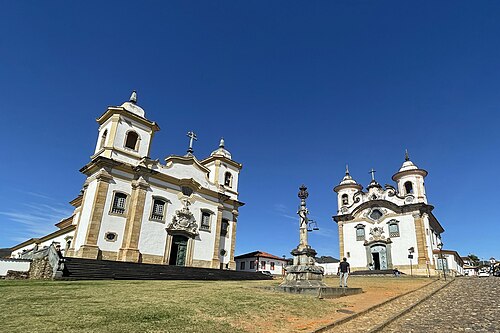
A Baroque ensemble with the churches of São Francisco and Carmo, the old Casa de Câmara e Cadeia (town hall and jail), and a pillory.
Catedral Basílica de Nossa Senhora da Assunção
Church · Praça Cláudio Manoel (Praça da Sé), Centro
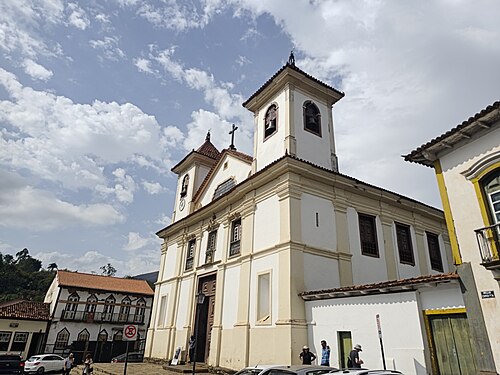
Mariana's Sé (cathedral) holds an 18th-century organ built in Lisbon.
Igreja de São Pedro dos Clérigos
Church · Town center
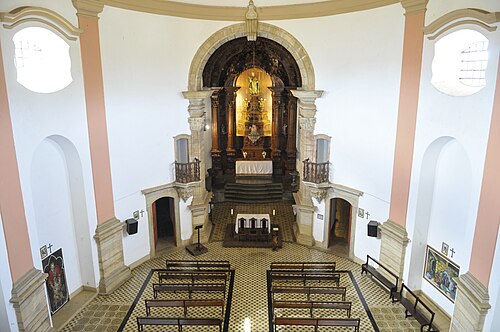
It sits at the top of the city and offers a view of the historic center. Its towers were only completed in the 20th century.
Museu de Arte Sacra
Museum · Historic center
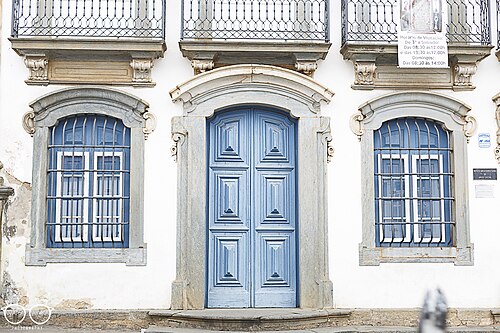
The archdiocese's collection of religious art, with pieces from the 18th and 19th centuries.
Museu da Música
Museum · Historic center
Housed in the Palácio dos Bispos, it brings together scores and documents of Minas Gerais music.
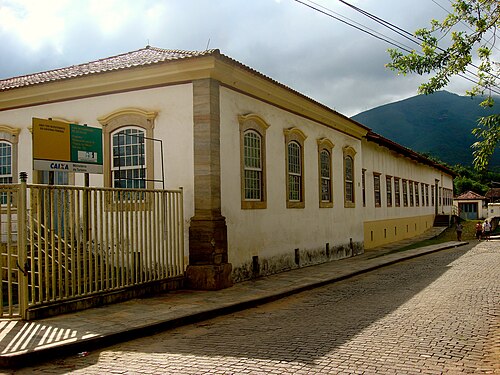
Museu Casa Alphonsus de Guimaraens
Museum · Rua Direita, Centro
The house where the Symbolist poet lived, with free admission.
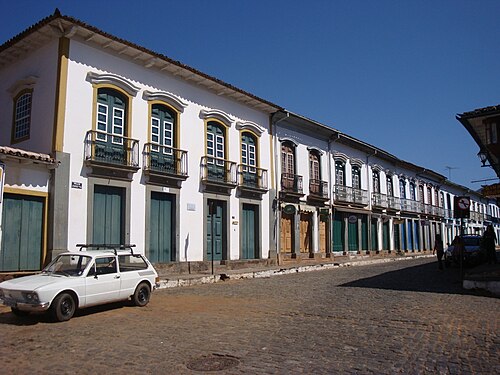
Rua Direita
Historic street · Town center
One of the oldest and best-preserved streets, with colonial mansions and soapstone balconies.
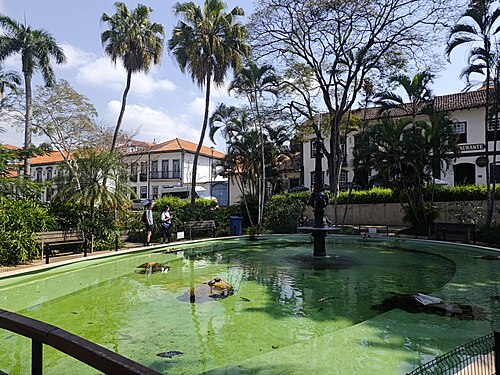
Praça Gomes Freire
Square · Town center
The Jardim de Mariana, a meeting point with bars and restaurants in the old mansions.
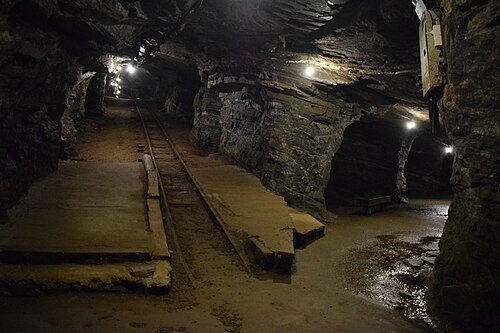
Mina da Passagem
Mine · District of Passagem de Mariana
A former gold mine open to visitors, with a descent by trolley.
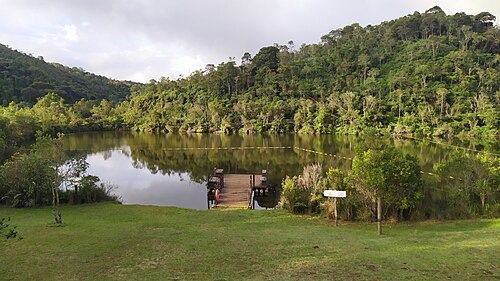
Parque Estadual do Itacolomi
Nature · Entre Mariana e Ouro Preto
A park with trails, waterfalls, and the Pico do Itacolomi, at 1,772 m.
Heritage
- Architectural and urban ensemble of Mariana · Listed historic center; city declared a National Monument in 1945
- Catedral Basílica de Nossa Senhora da Assunção · The first cathedral of Minas Gerais
- Igreja de São Francisco de Assis · Baroque church with paintings by Mestre Ataíde
- Igreja de Nossa Senhora do Carmo · Rococo church on Praça Minas Gerais
- Matriz de São Caetano · Church in the district of Monsenhor Horta, listed by IPHAN in 1953
Nature
- Parque Estadual do Itacolomi · Protected area with trails, waterfalls, and the Pico do Itacolomi
- Serra do Caraça · The edge of the municipality reaches close to 2,000 m in altitude
- Waterfalls · Brumado, Serrinha, Cristal, and Prainha are among the falls in the region
Rivers and waters
- River basin: Rio Doce
- Rivers: Ribeirão do Carmo, Rio Gualaxo do Sul
Climate
- Type: Highland tropical
- Winter: Dry and colder, with morning fog
- Summer: Hot and rainy
- Best time to visit: April to September, in the dry season
Typical food
- Cuscuz de Padre Viegas · A mix of cornmeal, bacon, chicken and calabresa sausage, a traditional dish of the Padre Viegas (Sumidouro) district. The Festival do Cuscuz is held every year on October 12, according to the town hall.
Festivals and events
- Carnival (Feb) · Street parties (blocos) in the historic center, such as the Zé Pereira da Chácara
- Holy Week (Apr) · Processions and sawdust carpets along the old streets
- Winter Festival (Jul) · Cultural program organized jointly with Ouro Preto
- Feast of Nossa Senhora do Carmo (Jul) · Celebration of the patron saint; July 16 is also the city's anniversary
- Semana do Mestre Ataíde (Oct) · Workshops and exhibitions about the painter
Fun facts
- Mariana was the first town, the first city, and the first capital of Minas Gerais.
- It is one of the first planned cities in Brazil, with an urban plan dating from 1745.
- The Igreja de São Pedro dos Clérigos only had its towers completed in the 20th century.
- Alphonsus de Guimaraens wrote the lyrics of the city's anthem.
- In 1945, Getúlio Vargas declared Mariana a National Monument.
Getting there
- Belo Horizonte · 115 km via BR-040 and BR-356, passing through Ouro Preto
- Ouro Preto · About 12 km via BR-356
Districts
- Bandeirantes
- Cachoeira do Brumado
- Camargos
- Cláudio Manuel
- Furquim
- Monsenhor Horta
- Padre Viegas
- Passagem de Mariana
- Santa Rita Durão
Notable people from Mariana
- Cláudio Manuel da Costa · Poet and Inconfidência conspirator, born in what is now the Padre Viegas district
- Frei José de Santa Rita Durão · Author of the epic poem Caramuru, born in the Santa Rita Durão area
- Mestre Ataíde · Painter of the Minas Baroque, a native of Mariana
- Alphonsus de Guimaraens · Symbolist poet who lived in Mariana from 1906; his house became a museum
- Pedro Aleixo · Politician and Vice President of Brazil, born in the Bandeirantes district
- Dom Frei Manuel da Cruz · First bishop of Mariana
People born in Mariana
- Adão Ambrósio · Brazilian footballer · 1951–2011
- Aloísio Hilário de Pinho · Catholic priest, Catholic bishop, theologian · 1934–2021
- Alphonsus de Guimaraens Filho · Writer, poet · 1918–2008
- Antônio Benedicto de Santa Bárbara · 1811–1900
- Antônio Pires da Silva Pontes Leme · Explorador · b. 1750
- Celso Arinos Motta · Brazilian politician
- Celso Cota
- Conceição Ribeiro da Silva Machado · Brazilian biomedical scientist, researcher and university professor
- Diogo de Vasconcelos · Brazilian historian, politician, journalist and lawyer · 1843–1927
- Domingos Soares Ferreira Penna · Naturalist, archaeologist · 1818–1888
- Dr. Gomes Freire
- Duarte Júnior · Ex-deputado Federal do Brasil (2024)
- Eduardo Mendes Guimarães Júnior · Modernist architect from Minas Gerais, professor at the UFMG School of Architecture
- Eleuthério de Souza Novaes · Juiz
- Eliane Parreira Guimarães · Model, beauty pageant contestant
- Elias Layon · Brazilian painter and sculptor
- Emílio Ibraim Silva · Brazilian footballer · 1925–2021
- Felisberto Caldeira Brant Pontes de Oliveira Horta · Sailor, soldier, politician · 1772–1842
- Fernando Morais · Jornalista brasileiro · b. 1946
- Francisco de Paula Pereira Duarte · Judge, magistrate · 1784–1855
- Geraldo Delamore · Futebolista brasileiro · b. 1963
- Hebe Rôla
- Helber José Gomes Goulart · Brazilian activist who fought against the military dictatorship · 1944–1973
- Hélio Petrus
- Jacintho Maria de Godoy · Pharmacist · 1904–1975
- Jadir Macedo · Politician from Mariana
- Jhosefer · Futebolista · b. 2004
- Joaquina de Pompéu
- José Benedito Neves
- José Francisco de Mesquita · 1790–1873
- José Jerônimo de Mesquita · 1790–1895
- José Joaquim da Rocha · Brazilian capitão-mor and Brazilian deputy to the Cortes of Lisbon · 1777–1848
- José Joaquim Fernandes Torres · Brazilian politician · 1797–1869
- José Marciano da Silva Pontes
- José Pedro Dias de Carvalho · Brazilian politician · 1808–1881
- José Pinto da Fonseca · Entomologista · 1896–1982
- José Silvério Horta · Religioso · 1859–1933
- João Baptista Vieira Godinho · Portuguese military officer · 1742–1811
- João Cavalcanti
- João Fernandes de Oliveira
- João Nepomuceno Correia e Castro · Brazilian painter · 1752–1795
- João Ramos Filho · Brazilian merchant and politician · 1929–2008
- João Severiano Maciel da Costa · Brazilian politician · 1769–1833
- Lúcio Soares Teixeira de Gouveia · Brazilian politician · 1792–1838
- Moacir Rodrigo de Castro Maia
- Roque Camêllo
- Rudison · Futebolista brasileiro · b. 1983
- Salomão de Vasconcellos · Historian, jurist and physician from Minas Gerais · 1877–1965
- Santa Rita Durão · Portuguese-Brazilian Augustinian friar, librarian, orator and poet · 1722–1784
- Sinhá Olímpia · 1889–1976
- Sylvinha Araújo · Composer, vocalist · 1951–2008
- Terezinha Ramos
- Thiago Cota · n. 1985
- Turquinho
- Wendel · Futebolista brasileiro · b. 1982
- Willian José Assis Silva · Brazilian footballer · 1933–2024
- Zizi Sapateiro · Sapateiro, pintor · b. 1927
City hall
- Mayor: Juliano Duarte (Juliano Vasconcelos Gonçalves) (PSB), term 2025–2028
- Address: Praça Juscelino Kubitschek, s/n, Pilar, Mariana, MG, CEP 35420-000
- Phone: (31) 3557-9000
- Website: www.mariana.mg.gov.br
Frequently asked questions
Where is Mariana?
Mariana is a municipality in the state of Minas Gerais, Brazil, in the Greater BH and Central region, 115 km from Belo Horizonte.
What is there to do in Mariana?
The attractions of Mariana include Praça Minas Gerais, Catedral Basílica de Nossa Senhora da Assunção, Igreja de São Pedro dos Clérigos, Museu de Arte Sacra, Museu da Música, Museu Casa Alphonsus de Guimaraens.
What is the population of Mariana?
Mariana has about 61 thousand inhabitants in an area of 1.194 km².
What is the typical food of Mariana?
Cuscuz de Padre Viegas (A mix of cornmeal, bacon, chicken and calabresa sausage, a traditional dish of the Padre Viegas (Sumidouro) district. The Festival do Cuscuz is held every year on October 12, according to the town hall).
When is the best time to visit Mariana?
April to September, in the dry season. The climate is highland tropical.
How do you get to Mariana?
Belo Horizonte: 115 km via BR-040 and BR-356, passing through Ouro Preto. Ouro Preto: About 12 km via BR-356.
Who was born in Mariana?
Notable people from Mariana include Cláudio Manuel da Costa, Frei José de Santa Rita Durão, Mestre Ataíde, Alphonsus de Guimaraens, Pedro Aleixo, Dom Frei Manuel da Cruz, Adão Ambrósio (brazilian footballer), Aloísio Hilário de Pinho (catholic priest, catholic bishop, theologian).
Which tourism region is Mariana part of?
Mariana is part of IGR Ouro, one of the 47 official tourism regions of Minas Gerais, with 18 municipalities.
What are the festivals of Mariana?
Carnaval (Feb), Semana Santa (Apr), Festival de Inverno (Jul), Festa de Nossa Senhora do Carmo (Jul), Semana do Mestre Ataíde (Oct).
What are people from Mariana called?
People born in Mariana are called marianense.
Towns near Mariana
- Ouro Preto · 10 km in a straight line
- Diogo de Vasconcelos · 26 km in a straight line
- Acaiaca · 28 km in a straight line
- Catas Altas · 34 km in a straight line
- Ouro Branco · 34 km in a straight line
- Catas Altas da Noruega · 36 km in a straight line
- Piranga · 36 km in a straight line
- Itaverava · 39 km in a straight line